Product Description
Planetary Gearing Arrangement Gear Box for Concrete Mixer
Company Information
HangZhou Gearbox Manufacturing Co., Ltd. registered in 1979. The company is located at national high-tech development zone, HangZhou, ZheJiang , China, with more than 38 years experience to specialize in reserch and development gear transmission products. The factory covers an area of 87,000 square meters. The company has passed ISO9001 quality system certification in 1999, and was rated as high qualified R&D engineer teem and manufacturing talents as well as first-class processing and testing equipments.
Specifications
1. Characterized by compact structure, light weight, large torque and excellent performance, it’s a new reducing transmission system with advanced design and manufactured on the basis of the modularized combination, which can meet client’s requirement on connection and installation.
2. Made of rib-reinforced rigid case, premium alloy-steel gear that’s hardened by carbon penetration and grinded precisely, it has stable running, low noise, large loading capacity, low consumption, efficient transmission temperature rise and long service life etc.
Packaging & Shipping
Equipment
Patent Certificate
FAQ
Are you trading company or manufacturer ?
A: We are manufacturer with 38 years experience.
Q: How long is your delivery time?
A: Generally it is within 10 days if the goods are in stock, for goods produced as per order, it is within 35 days after confirmation of order.
Q:How long should I wait for the feedback after I send the enquiry?
A: Normally Within 12 hours.
Q:What information should I give you to confirm the product?
A: Model/Size, Transmission Ratio, Speed, Shaft directions & Order quantity etc.
Q: Hong long is your product warranty?
A:We offer 12 months warranty from departure date of the goods.
Q: What is your payment terms?
T/T 100% in advance for amount less than USD10000.-, 30% T/T in advance ,balance before shipment for amount above USD10000.-
If you have any other questions, please feel free to contact us below:
Contact Us
| Application: | Motor, Machinery, Marine, Agricultural Machinery |
|---|---|
| Function: | Change Drive Torque, Speed Changing, Speed Reduction, Speed Increase |
| Layout: | Cycloidal |
| Hardness: | Hardened Tooth Surface |
| Installation: | Torque Arm Type |
| Step: | Single-Step |
| Customization: |
Available
| Customized Request |
|---|
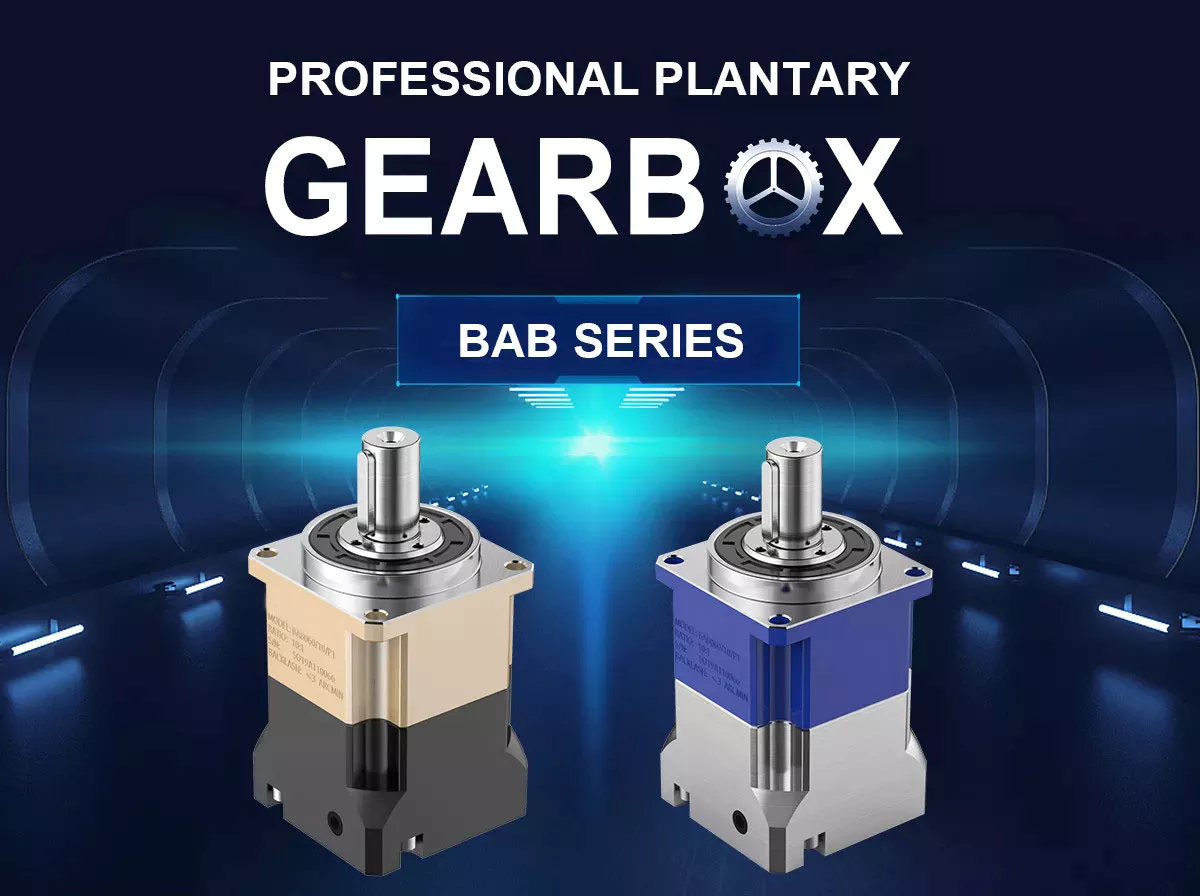
Planetary Gearbox Components
The basic components of a planetary gearset are an input, output, and stationary position. Different types of planetary gearboxes will have different output ratios and torques. A leading company for planetary gearbox design, CZPT, provides the necessary components. These components can vary in both male and female shafts and come with a variety of modular options. Here are a few things to consider about each component.
CFHK Series
The CFHK Series is a multistage planetary gearbox that contains multiple planetary gears. The multiple teeth of each planetary gear mesh simultaneously during operation to increase the transmittable torque. The gears are case hardened and ground, and the ratios of the planetary gears are integers. They were first functionally described by Leonardo da Vinci in 1490. Today, the CFHK Series is a favorite among automotive engineers and manufacturers.
The CH Series offers high accuracy with a compact design and case hardened, hypoid, and helical gearing. These gearboxes are also available in the CFXR series, with low backlash and friction. These planetary gearboxes are designed to provide high torque and high precision in a variety of applications. In addition, the CFXR series features 100% helical gearing and low backlash.
The CFHK Series features a sun gear that drives the next stage. These gears can be put in series or serially in the same housing. In some cases, the output shaft of the first stage becomes the input shaft of the second stage. In addition, ring gears are also used as structural parts of smaller gearboxes. An example of a planetary gearbox is the pencil sharpener mechanism. The pencil is placed on an axis that is set on a sun gear. The sun gear drives the next planet stage.
A planetary gear unit’s gear ratio is determined by the number of teeth in the sun gear and ring gear. The smaller the sun gear, the smaller the ratio between the sun gear and planet gears. The largest gear ratio in a planetary gear unit is 10:1. A higher number of teeth increases the transmission ratio. In order to maximize torque, the planetary gears must be rearranged. A smaller sun gear will have higher torque than a large ring gear.
CFX Series
The HPN Harmonic Planetary(r) Series planetary gearboxes offer a low-cost solution with high-performance and high-reliability. This modular design is easy to install and requires very little maintenance. Its planetary design and full complement of needle rollers allow for extended life and quiet operation. In addition, the HPN Harmonic Planetary(r) Series is available in a range of sizes.
The compact size and high-speed design of planetary gearboxes results in excellent heat dissipation. However, high-speed or sustained performance applications may require lubricants. A planetary gearbox will have smaller minimum steps to minimize noise and vibration. Planetary gears will give you the highest level of efficiency while minimizing noise. As a result, they can provide high-quality 3D prints.
A planetary gear train is composed of a ring gear and planet gears, each supported by a carrier. A ring gear is pink, while the sun gear is red. The sun gear and carrier rotate around each other at a 45-degree angle. This is also known as an epicyclic gear. Planetary gearboxes are often found in space-constrained applications. The CFX Series features a compact design and excellent performance.
The CFX Series features a robust design that is easy to install. Its compact size makes installation of planetary gearboxes easier and faster. They are available in three different configurations for continuous, intermittent, and counter-clockwise operation. The CFX Series offers the perfect solution for your accelerating needs. They’re a great solution for any automotive or industrial application. You can easily configure the CFX Series to meet your specific requirements.
CAP Series
The Candy Controls CAP Series is a new generation of compact, precision planetary gearboxes that combine high torques with low backlash and exceptional wear resistance. This rotary flange planetary gearbox is ideal for a variety of industrial, mining and marine applications. Its modular construction enables users to easily mount different stages, hydraulic or electric motors, and different types of gears. Its CPH Series features an extremely rigid alloy steel housing, carburized gears, and induction hardened gears.
The CAP Series utilizes multiple planetary gears for high torque transmission. The number of planetary gears is not fixed, but most planetary gearboxes utilize at least three. The larger the number of planetary gears, the higher the transmittable torque. A planetary gearbox is composed of multiple planetary gears with a meshing action that occurs simultaneously during operation. The result is a higher efficiency and a smoother, quieter operation than a conventional gearbox.
The VersaPlanetary range features modular design for easy installation. This system includes mounting plates for typical FIRST (r) Robotics Competition motors. The mounting plates are designed to fit each motor. These planetary gearboxes are compatible with various types of motors, from small electric motors to large, heavy duty ones. They are also compatible with a variety of mounting systems, including CIM motors.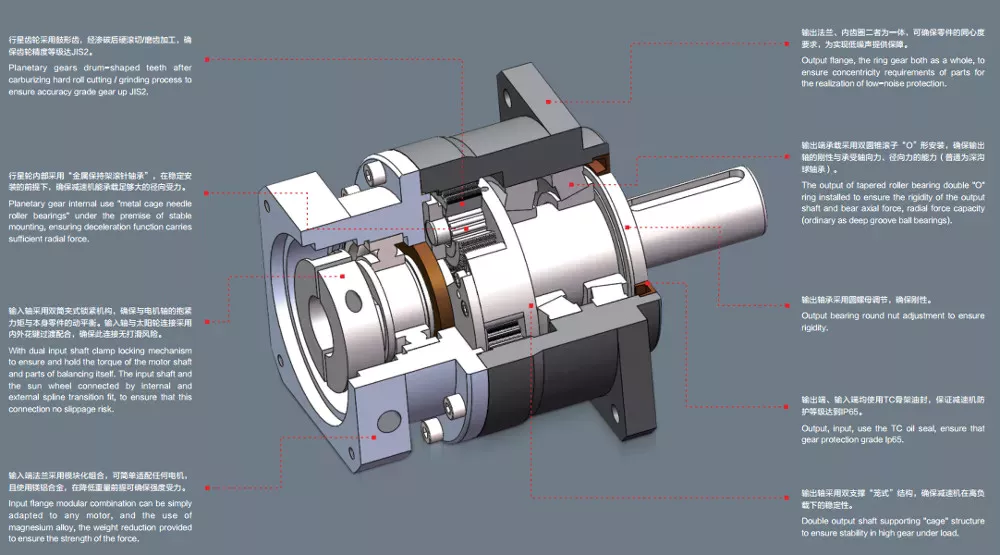
CAPK Series
The CZPT APK Series is a high precision, rotary flange style planetary gearbox. Its case hardened and ground gears are designed to provide excellent wear resistance, low backlash, and excellent precision. The CAPK Series offers high axial and moment load capacities in a compact housing. CZPT is the world leader in the production of planetary gearboxes. The CAPK Series features an array of high-quality, innovative features.
CZPT SMART Lubrication technology is used to keep the gears well-lubricated and reduce noise and vibration. The planetary gearbox’s 3-gear design is ideal for DIY CNC robotics. This series has a long history of quality, and CZPT uses only the best components. The CZPT 3:1 High Precision Planetary Gearbox is an excellent choice for CNC Robotics and other applications.
A multi-stage planetary gearbox combines individual ratios for a greater number of ratios. Additional planetary gears increase the transmittable torque. The direction of the output and drive shaft are always identical. The CAPK Series features a high-quality, durable construction. They are made from stainless steel and offer a long-term warranty. They are the best choice for industrial and commercial applications. While planetary gears are more expensive, they are highly efficient.
CFH Series
The Candy CFH Series planetary gearboxes offer the benefits of a modular design and a low backlash. They offer a variety of size options and excellent durability. This planetary gearbox is compact and wear resistant. The CFH Series planetary gearbox has a carburized, induction hardened gears and a rigid alloy steel housing. Its low backlash and precision make it an excellent choice for industrial applications.
The CFH Series planetary gearbox is a highly efficient, high-speed helical gear. The compact design of this gearbox results in high heat dissipation and low mass inertia. Planet carrier bearings experience significant lateral forces from the transmission of torque. As a result, radial and axial forces oppose each other. The result is that the torque is distributed over three gears, reducing noise, vibration, and wear.
The planetary gearbox has three main components: a sun gear (also known as the input gear), a ring gear, and two planet gears. These are connected by a carrier that rotates about a 45-degree clockwise axis. The CFH Series of gears is available in triple and double stages. They can also be used in electric motors. As a result, the CFH Series is highly versatile.
The CFH Series of planetary gearboxes can be found in all kinds of applications, including automotive transmissions. Their compact design and high-performance performance make them a popular choice for space-constrained applications. This gearbox has several benefits and is a great alternative to a conventional helical gearbox. These gearboxes are highly effective for reducing torque and speed, and are compact enough to fit in most applications.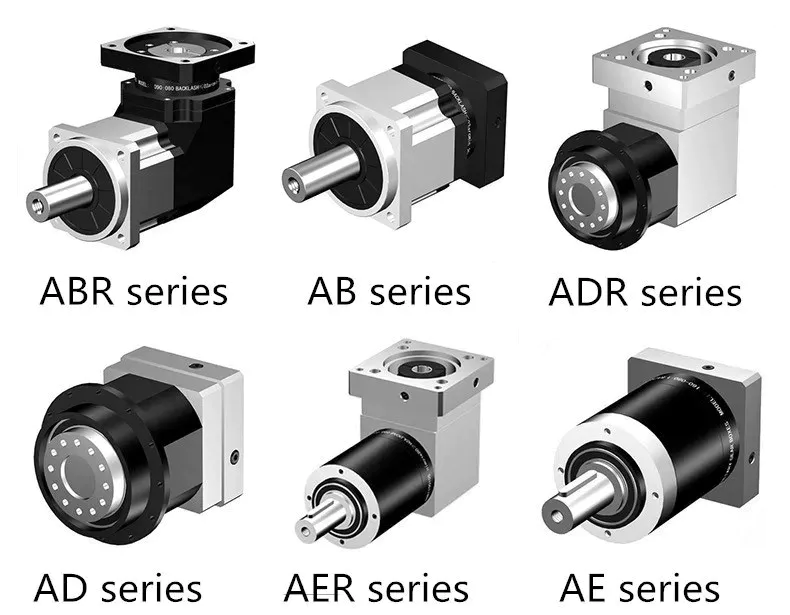
CZPT
If you need a high-quality planetary gearbox, the CZPT Planetary Series is the right choice. This Italian company designs and manufactures gearboxes in its San Polo d’Enza, Italy, facility with 11 branch offices and three production facilities. The company is attempting to replicate the success of the Italian Super Car industry, which has gained global recognition. The company provides a range of gearboxes for use in heavy industry, agriculture, offshore, aerial and marine work.
With over 40 years of experience, CZPT manufactures a wide range of high-quality gearboxes. From bevel-helical units to Helical units, wheel gears and negative brakes, the company has been manufacturing quality components for many industries. CZPT is a trusted Australian distributor of CZPT gear components. The company is dedicated to providing the best planetary gears for every industry.
If your CZPT Planetary gearbox is malfunctioning, you can have it repaired quickly and easily. The company uses quality materials and a variety of sizes and output ratios to cater to the most demanding applications. In addition, you can customize your gearbox to suit your specific needs. CZPT Planetary Gearboxes are highly versatile and customizable, offering infinite scalability.


editor by CX 2023-10-18
China Standard CZPT 313 Series Travel Drives Reducer Transit Mixer Drives Planetary Gearbox bevel planetary gearbox
Product Description
1 YEAR WARRANTY AND EXCELLENT SERVICE
7 DAYS REFUND PAYMENT IN CASE OF QUALITY
24 HOURS SMOOTHLY COMMUNICATION
Offers original and replacement CZPT 313 Series Planetary Gearbox for our customers. We will save customer costs, increase productivity and profit margins, Welcome to Get Latest Price now!
Product Description
|
Hardness: |
Hardened Tooth Surface |
|
Installation: |
Horizontal Type |
|
Layout: |
Coaxial |
|
Gear Shape: |
Spur Gear |
|
Step: |
Three-Step |
|
Type: |
Planetary Gear Reducer |
|
Power: |
Hydraulic Power Units |
|
Material: |
Cast Iron |
|
Transport Package: |
Wooden Box |
Detailed Photos
Company Profile
FAQ
Q: Are you trading company or manufacturer?
A: We are factory with more than 20 years experience.
Q: How long for delivery?
A: Generally it is 15-30days as we are customized service we confirm with customer when place order.
Q: What is the MOQ?
A: It depends on what you are buying. Normally, our minimum order is 1 20′ full container and LCL container (less than a
container load) can be acceptable.
Q: Can you customize my products?
A: Yes, we can customized products with your design drawings like DWG, DXF, DXW, IGES, STEP, PDF etc.
Q: What is your terms of payment?
A: 30% T/T in advance, balance before shipment, or as per discussion.
Q: What about your quality control?
A: * . Checking the raw material after they reach our factory—–Incoming quality control(IQC)
* . Checking the details before the production line operated
* . Have full inspection and routing inspection during mass production—-In-process quality control(IPQC)
* . Checking the goods after they are finished—-Final quality control(FQC)
* . Checking the goods after they are finished—-Outgoing quality control(QC)
* . 100% inspection and delivery before shipment
| Application: | Motor, Electric Cars, Motorcycle, Machinery, Marine, Toy, Agricultural Machinery, Car |
|---|---|
| Hardness: | Soft Tooth Surface |
| Installation: | 90 Degree |
| Layout: | Coaxial |
| Gear Shape: | Cylindrical Gear |
| Step: | Four-Step |
| Customization: |
Available
| Customized Request |
|---|
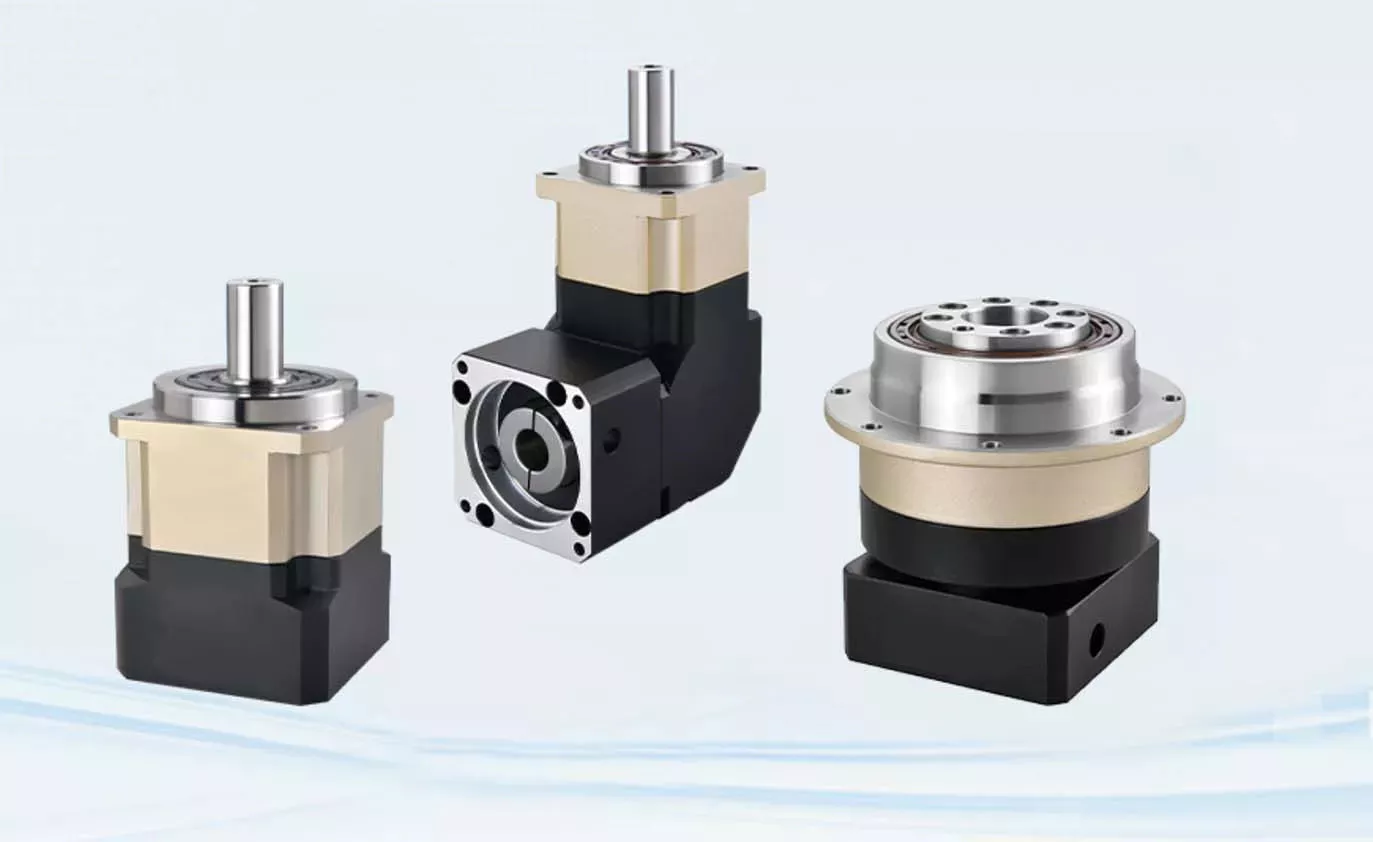
Planetary Gearbox
This article will explore the design and applications of a planetary gearbox. The reduction ratio of a planetary gearbox is dependent on the number of teeth in the gears. The ratios of planetary gearboxes are usually lower than those of conventional mechanical transmissions, which are mainly used to drive engines and generators. They are often the best choice for heavy-duty applications. The following are some of the advantages of planetary gearboxes.
planetary gearboxes
Planetary gearboxes work on a similar principle to solar systems. They rotate around a center gear called the sun gear, and two or more outer gears, called planet gears, are connected by a carrier. These gears then drive an output shaft. The arrangement of planet gears is similar to that of the Milky Way’s ring of planets. This arrangement produces the best torque density and stiffness for a gearbox.
As a compact alternative to normal pinion-and-gear reducers, planetary gearing offers many advantages. These characteristics make planetary gearing ideal for a variety of applications, including compactness and low weight. The efficiency of planetary gearing is enhanced by the fact that ninety percent of the input energy is transferred to the output. The gearboxes also have low noise and high torque density. Additionally, their design offers better load distribution, which contributes to a longer service life.
Planetary gears require lubrication. Because they have a smaller footprint than conventional gears, they dissipate heat well. In fact, lubrication can even lower vibration and noise. It’s also important to keep the gears properly lubricated to prevent the wear and tear that comes with use. The lubrication in planetary gears also helps keep them operating properly and reduces wear and tear on the gears.
A planetary gearbox uses multiple planetary parts to achieve the reduction goal. Each gear has an output shaft and a sun gear located in the center. The ring gear is fixed to the machine, while the sun gear is attached to a clamping system. The outer gears are connected to the carrier, and each planetary gear is held together by rings. This arrangement allows the planetary gear to be symmetrical with respect to the input shaft.
The gear ratio of a planetary gearbox is defined by the sun gear’s number of teeth. As the sun gear gets smaller, the ratio of the gear will increase. The ratio range of planetary gears ranges from 3:1 to ten to one. Eventually, however, the sun gear becomes too small, and the torque will fall significantly. The higher the ratio, the less torque the gears can transmit. So, planetary gears are often referred to as “planetary” gears.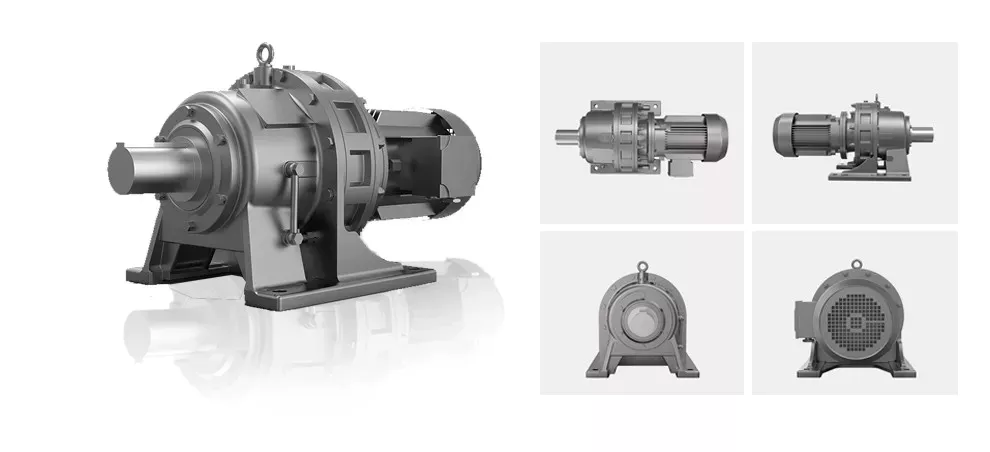
Their design
The basic design of a Planetary Gearbox is quite simple. It consists of three interconnecting links, each of which has its own torque. The ring gear is fixed to the frame 0 at O, and the other two are fixed to each other at A and B. The ring gear, meanwhile, is attached to the planet arm 3 at O. All three parts are connected by joints. A free-body diagram is shown in Figure 9.
During the development process, the design team will divide the power to each individual planet into its respective power paths. This distribution will be based on the meshing condition of all gears in the system. Then, the design team will proceed to determine the loads on individual gear meshes. Using this method, it is possible to determine the loads on individual gear meshes and the shape of ring gear housing.
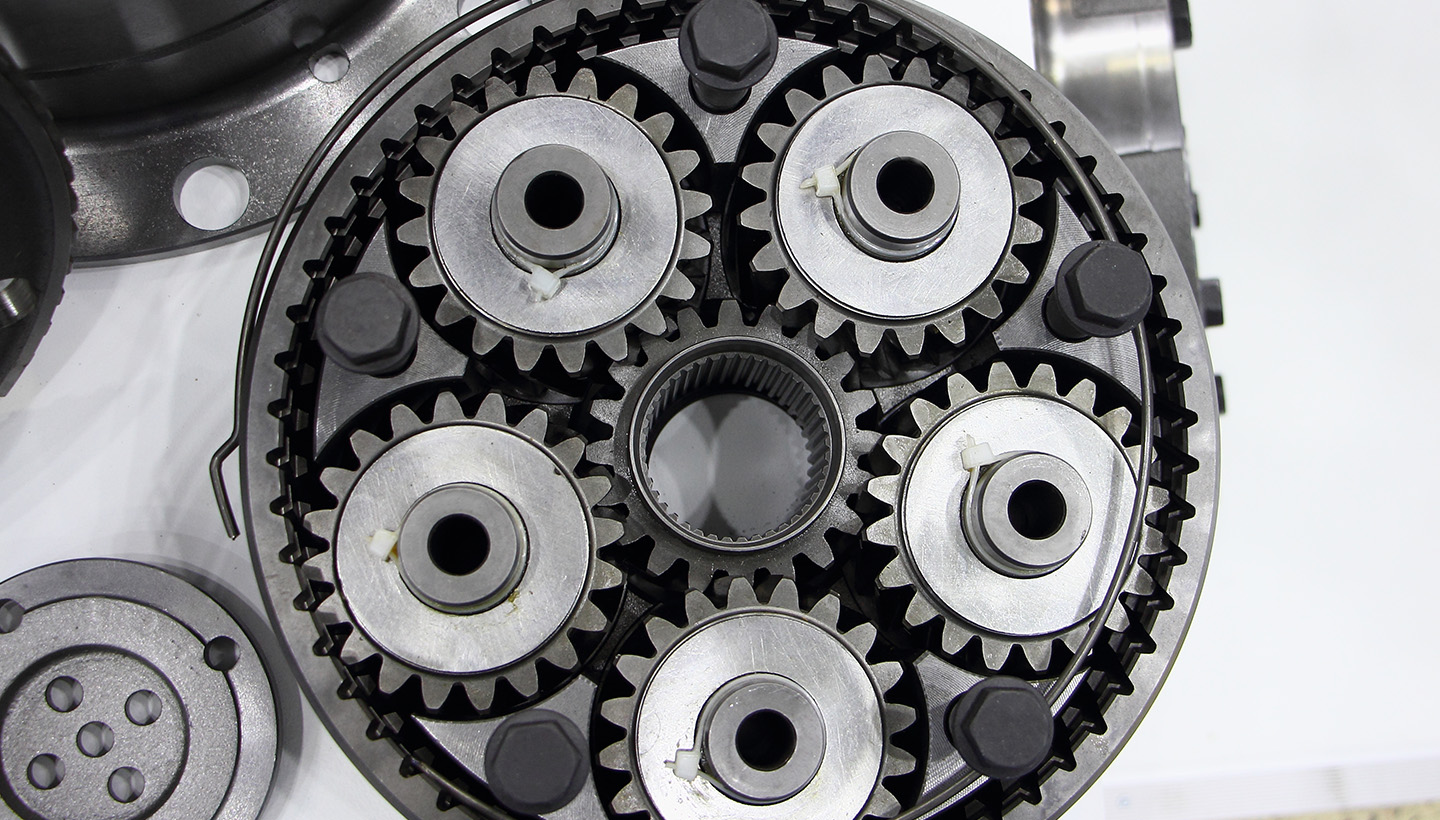
Planetary Gearboxes are made of three gear types. The sun gear is the center, which is connected to the other two gears by an internal tooth ring gear. The planet pinions are arranged in a carrier assembly that sets their spacing. The carrier also incorporates an output shaft. The three components in a Planetary Gearbox mesh with each other, and they rotate together as one. Depending on the application, they may rotate at different speeds or at different times.
The planetary gearbox’s design is unique. In a planetary gearbox, the input gear rotates around the central gear, while the outer gears are arranged around the sun gear. In addition, the ring gear holds the structure together. A carrier connects the outer gears to the output shaft. Ultimately, this gear system transmits high torque. This type of gearbox is ideal for high-speed operations.
The basic design of a Planetary Gearbox consists of multiple contacts that must mesh with each other. A single planet has an integer number of teeth, while the ring has a non-integer number. The teeth of the planets must mesh with each other, as well as the sun. The tooth counts, as well as the planet spacing, play a role in the design. A planetary gearbox must have an integer number of teeth to function properly.
Applications
In addition to the above-mentioned applications, planetary gearing is also used in machine tools, plastic machinery, derrick and dock cranes, and material handling equipments. Further, its application is found in dredging equipment, road-making machinery, sugar crystallizers, and mill drives. While its versatility and efficiency makes it a desirable choice for many industries, its complicated structure and construction make it a complex component.
Among the many benefits of using a planetary gearbox, the ability to transmit greater torque into a controlled space makes it a popular choice for many industries. Moreover, adding additional planet gears increases the torque density. This makes planetary gears suitable for applications requiring high torque. They are also used in electric screwdrivers and turbine engines. However, they are not used in everything. Some of the more common applications are discussed below:
One of the most important features of planetary gearboxes is their compact footprint. They are able to transmit torque while at the same time reducing noise and vibration. In addition to this, they are able to achieve a high speed without sacrificing high-quality performance. The compact footprint of these gears also allows them to be used in high-speed applications. In some cases, a planetary gearbox has sliding sections. Some of these sections are lubricated with oil, while others may require a synthetic gel. Despite these unique features, planetary gears have become common in many industries.
Planetary gears are composed of three components. The sun gear is the input gear, whereas the planet gears are the output gears. They are connected by a carrier. The carrier connects the input shaft with the output shaft. A planetary gearbox can be designed for various requirements, and the type you use will depend on the needs of your application. Its design and performance must meet your application’s needs.
The ratios of planetary gears vary depending on the number of planets. The smaller the sun gear, the greater the ratio. When planetary stages are used alone, the ratio range is 3:1 to 10:1. Higher ratios can be obtained by connecting several planetary stages together in the same ring gear. This method is known as a multi-stage gearbox. However, it can only be used in large gearboxes.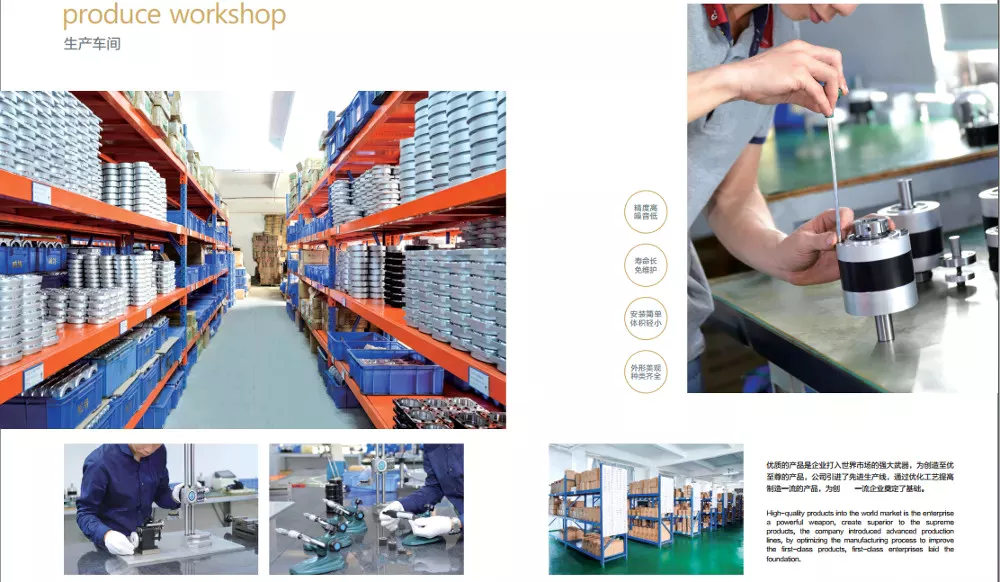
Maintenance
The main component of a planetary gearbox is the planetary gear. It requires regular maintenance and cleaning to remain in top shape. Demand for a longer life span protects all other components of the gearbox. This article will discuss the maintenance and cleaning procedures for planetary gears. After reading this article, you should know how to maintain your planetary gearbox properly. Hopefully, you can enjoy a longer life with your gearbox.
Firstly, it is important to know how to properly lubricate a planetary gearbox. The lubricant is essential as gears that operate at high speeds are subject to high levels of heat and friction. The housing of the planetary gearbox should be constructed to allow the heat to dissipate. The recommended oil is synthetic, and it should be filled between 30 and 50 percent. The lubricant should be changed at least every six months or as needed.
While it may seem unnecessary to replace a planetary gearbox, regular servicing will help it last a long time. A regular inspection will identify a problem and the appropriate repairs are needed. Once the planetary gearbox is full, it will plug with gear oil. To avoid this problem, consider getting the unit repaired instead of replacing the gearbox. This can save you a lot of money over a new planetary gearbox.
Proper lubrication is essential for a long life of your planetary gearbox. Oil change frequency should be based on oil temperature and operating speed. Oil at higher temperatures should be changed more frequently because it loses its molecular structure and cannot form a protective film. After this, oil filter maintenance should be performed every few months. Lastly, the gearbox oil needs to be checked regularly and replaced when necessary.
editor by CX 2023-10-17
China high quality Planetary Winch Drive Slew Gear Housing Reducer Gearbox Small Wind Turbine Hollow Shaft High Torque Motors Bevel 2 Speed Multi Stage Inline Epicyclic Hydraulic spiral bevel gear
Product Description
Planetary Winch Drive Slew Gear Housing Reducer Gearbox Small Wind Turbine Hollow Shaft High Torque Motors Bevel 2 Speed Multi Stage Inline Epicyclic Hydraulic
1. The wide and comprehensive range of N series for industrial applications
2. Low-speed shaft design: Cylindrical with key, splined, hollow with shrink disc or splined hollow shaft
3. Rigid and precise nodular cast iron casing
4. Low noise running, high manufacturing quality standard
5. High and reliable performance, load capacity and low-speed shaft bearing
Please click here for more types!
Application
Our factory
Related Products
For more reducers and mechanical accessories, please click here to view
| Application: | Motor, Electric Cars, Motorcycle, Machinery, Marine, Toy, Agricultural Machinery, Car |
|---|---|
| Function: | Distribution Power, Speed Changing, Speed Reduction |
| Layout: | Wrom |
| Hardness: | Hardened Tooth Surface |
| Installation: | Planetary |
| Step: | Planetary |
How do epicyclic gears contribute to gear reduction and speed increase?
Epicyclic gears, also known as planetary gears, play a significant role in achieving gear reduction and speed increase in various mechanical systems. Here’s a detailed explanation:
1. Gear Reduction:
Epicyclic gears can achieve gear reduction by utilizing their unique gear arrangement. The gear reduction is achieved by fixing or holding certain components of the gear system, such as the ring gear or the planet carrier, while the input and output shafts rotate. This causes the sun gear to drive the planet gears, resulting in a reduction of output speed and an increase in torque. The gear ratio formula for gear reduction in an epicyclic gear system is R = (1 + S) / (1 + R), where R is the number of teeth on the ring gear and S is the number of teeth on the sun gear.
2. Speed Increase:
Epicyclic gears can also be used to achieve speed increase when certain components of the gear system are held fixed or driven while the output shaft rotates. In this configuration, the input torque is divided among multiple planet gears, which rotate around the sun gear and drive the output shaft. This results in an increase in output speed and a decrease in torque. The gear ratio formula for speed increase in an epicyclic gear system is R = (1 + R) / (1 + S), where R is the number of teeth on the ring gear and S is the number of teeth on the sun gear.
3. Multiple Stages:
Epicyclic gears can achieve higher gear reduction or speed increase by incorporating multiple stages within a single gear system. Each stage consists of a set of gears, including a sun gear, planet gears, and a ring gear. The output of one stage becomes the input for the next stage, allowing for a cumulative effect on the gear ratio. By stacking multiple stages, the overall gear reduction or speed increase can be multiplied, providing a wide range of gear ratios to suit different application requirements.
4. Customizable Gear Ratios:
Epicyclic gears offer flexibility in achieving customizable gear ratios. By varying the number of teeth on the gears or using different combinations of gears, specific gear ratios can be obtained to meet the needs of the application. This customization capability allows for optimized speed control, gear reduction, and torque multiplication, making epicyclic gears versatile in a wide range of mechanical systems.
5. Compact Design:
Epicyclic gears contribute to gear reduction and speed increase while maintaining a compact design. The concentric arrangement of gears and the ability to achieve multiple gear stages within a single gear system result in a smaller overall footprint compared to other gear arrangements. This compact design is particularly useful in space-constrained applications where achieving high gear reduction or speed increase is essential.
In summary, epicyclic gears contribute to gear reduction and speed increase through their unique gear arrangement, multiple stages, customizable gear ratios, and compact design. These features make them widely used in various mechanical systems, such as automotive transmissions, industrial machinery, and robotics, where efficient power transmission and speed control are crucial.
What is the effect of various planetary gear arrangements on gear ratios?
The arrangement of planetary gears in an epicyclic gear system can have different effects on the resulting gear ratios. Here’s a detailed explanation:
1. Simple Planetary Gear:
In a simple planetary gear arrangement, the sun gear is the input, the ring gear is the output, and the planet gears are held stationary or act as idlers. The gear ratio in this configuration is determined by the number of teeth on the sun gear and the ring gear. The gear ratio formula can be expressed as R = (1 + S) / S, where R is the gear ratio and S is the number of teeth on the sun gear.
2. Compound Planetary Gear:
A compound planetary gear arrangement includes multiple sets of planetary gears. This arrangement can achieve higher gear ratios by utilizing multiple gear stages. Each stage consists of a sun gear, planet gears, and a ring gear. The output of one stage becomes the input for the next stage, resulting in a cumulative gear ratio. The overall gear ratio is the product of the individual gear ratios of each stage.
3. Multi-Stage Planetary Gear:
A multi-stage planetary gear arrangement combines multiple simple or compound planetary gearsets in series. Each gearset has its own gear ratio, and the output of one gearset becomes the input for the next gearset. This arrangement allows for even higher gear ratios by multiplying the individual gear ratios of each gearset. The overall gear ratio is the product of the gear ratios of all the gearsets.
4. Ravigneaux Planetary Gear:
A Ravigneaux planetary gear arrangement consists of two sets of planetary gears, with one set acting as a compound gear. This arrangement allows for different gear ratios depending on the engagement of clutches or brakes. By selectively engaging or disengaging certain elements, different gear ratios can be achieved, providing versatility in speed control and gear reduction.
5. Simpson Planetary Gear:
A Simpson planetary gear arrangement consists of three sets of planetary gears. It offers multiple gear ratios by selectively engaging or disengaging clutches or brakes on different gear elements. This arrangement provides a range of gear ratios and allows for more flexibility in speed control and power transmission.
6. Hybrid Planetary Gear:
A hybrid planetary gear arrangement combines different types of planetary gearsets, such as compound, Ravigneaux, or Simpson. This arrangement offers a wide range of gear ratios and allows for more complex speed control and power transmission requirements.
In summary, the various planetary gear arrangements, including simple, compound, multi-stage, Ravigneaux, Simpson, and hybrid, have different effects on gear ratios. These arrangements enable the achievement of specific gear ratios, cumulative gear ratios, or a combination of different gear ratios, providing versatility in speed control, gear reduction, and power transmission in a wide range of applications.
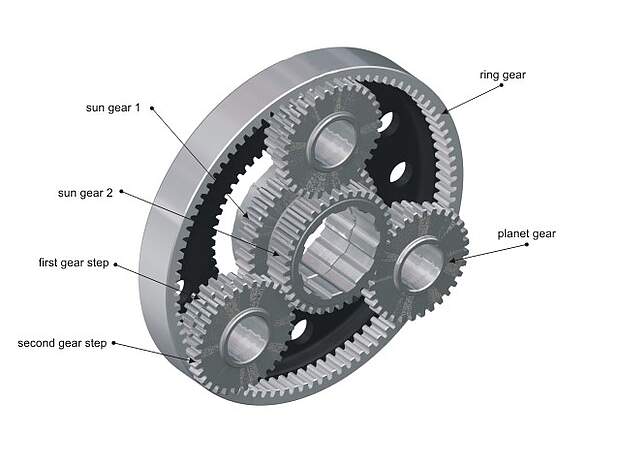
What is an epicyclic gear and how does it function?
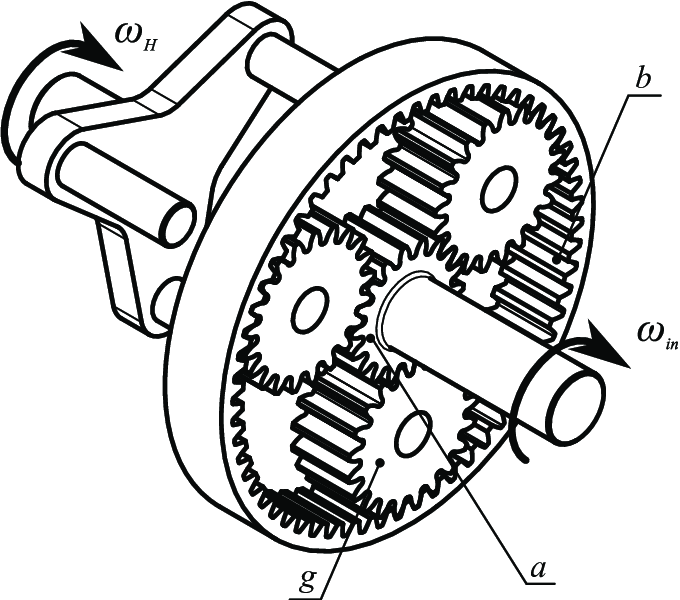
An epicyclic gear, also known as a planetary gear, is a gear system that consists of one or more outer gears, an inner gear, and a central gear, known as a sun gear. Here’s a detailed explanation of how it functions:
1. Gear Arrangement:
In an epicyclic gear system, the sun gear is located at the center and is surrounded by multiple outer gears, also called planet gears. The planet gears are typically mounted on a carrier, which allows them to rotate around the central sun gear.
2. Gear Engagement:
The teeth of the planet gears mesh with both the sun gear and an outer ring gear, also known as the annular gear. The annular gear has internal teeth that engage with the planet gears and external teeth that provide the outer boundary of the gear system.
3. Input and Output:
The input and output connections can be achieved in different ways depending on the design. Typically, the sun gear serves as the input shaft, while the carrier or the annular gear acts as the output shaft. The rotation of the input shaft (sun gear) causes the planet gears to orbit around it and rotate, resulting in the output shaft’s motion.
4. Gear Ratios:
An essential feature of epicyclic gears is their ability to provide different gear ratios by changing the arrangement of the gears. By holding one component stationary, such as fixing the annular gear or the carrier, and driving another component, the gear system can achieve various speed and torque combinations.
5. Gear Functions:
Epicyclic gears have several useful functions in mechanical systems, including:
- Speed reduction: By fixing the sun gear and rotating the carrier or the annular gear, the output speed can be reduced compared to the input speed.
- Speed increase: By fixing the carrier or the annular gear and rotating the sun gear, the output speed can be increased compared to the input speed.
- Directional changes: Changing the gear engagement arrangement allows reversing the direction of rotation between the input and output shafts.
- Torque multiplication: By utilizing the gear ratios, an epicyclic gear system can multiply or divide the torque between the input and output shafts, providing mechanical advantage.
- Braking: By holding specific components, such as the sun gear or the carrier, the gear system can act as a brake, preventing rotation or controlling the speed of the output shaft.
Epicyclic gears find applications in various mechanical systems, including automotive transmissions, gearboxes, power tools, and robotics, due to their compact size, versatility, and ability to achieve multiple gear ratios within a single gear system.


editor by CX 2023-10-08
China Professional Drive Spur Transmission Sun Planetary Epicyclic Gear straight bevel gear
Product Description
Product Description
Product Parameters
| Item | Spur Gear Axle Shaft |
| Material | 4140,4340,40Cr,42Crmo,42Crmo4,20Cr,20CrMnti, 20Crmo,35Crmo |
| OEM NO | Customize |
| Certification | ISO/TS16949 |
| Test Requirement | Magnetic Powder Test, Hardness Test, Dimension Test |
| Color | Paint , Natural Finish ,Machining All Around |
| Material | Aluminum: 5000series(5052…)/6000series(6061…)/7000series(7075…) |
| Steel: Carbon Steel,Middle Steel,Steel Alloy,etc. | |
| Stainess Steel: 303/304/316,etc. | |
| Copper/Brass/Bronze/Red Copper,etc. | |
| Plastic:ABS,PP,PC,Nylon,Delrin(POM),Bakelite,etc. | |
| Size | According to Customer’s drawing or samples |
| Process | CNC machining,Turning,Milling,Stamping,Grinding,Welding,Wire Injection,Cutting,etc. |
| Tolerance | ≥+/-0.03mm |
| Surface Treatment | (Sandblast)&(Hard)&(Color)Anodizing,(Chrome,Nickel,Zinc…)Plating,Painting,Powder Coating,Polishing,Blackened,Hardened,Lasering,Engraving,etc. |
| File Formats | ProE,SolidWorks,UG,CAD,PDF(IGS,X-T,STP,STL) |
| Sample | Available |
| Packing | Spline protect cover ,Wood box ,Waterproof membrane; Or per customers’ requirements. |
Our Advantages
Why Choose US ???
1. Equipment :
Our company boasts all necessary production equipment,
including Hydraulic press machines, Japanese CNC lathe (TAKISAWA), Korean gear hobbing machine (I SNT), gear shaping machine, machining center, CNC grinder, heat treatment line etc.
2. Processing precision:
We are a professional gear & gear shafts manufacturer. Our gears are around 6-7 grade in mass production.
3. Company:
We have 90 employees, including 10 technical staffs. Covering an area of 20000 square meters.
4. Certification :
Oue company has passed ISO 14001 and TS16949
5.Sample service :
We provide free sample for confirmation and customer bears the freight charges
6.OEM service :
Having our own factory and professional technicians,we welcome OEM orders as well.We can design and produce the specific product you need according to your detail information
Cooperation Partner
Company Profile
Our Featured Products
| Application: | Motor, Electric Cars, Motorcycle, Machinery, Marine, Agricultural Machinery, Car |
|---|---|
| Manufacturing Method: | Cast Gear |
| Toothed Portion Shape: | Spur Gear |
| Material: | Stainless Steel |
| Type: | Circular Gear |
| Yield: | 5, 000PCS / Month |
| Samples: |
US$ 0/Piece
1 Piece(Min.Order) | |
|---|
| Customization: |
Available
| Customized Request |
|---|
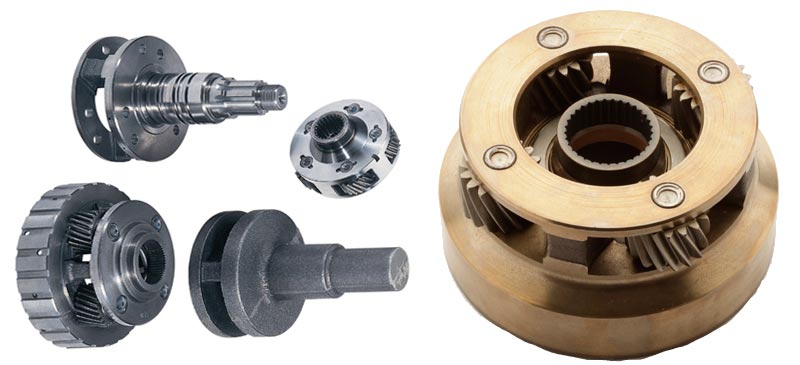
Can you explain how an epicyclic gear system handles torque distribution?
An epicyclic gear system, also known as a planetary gear system, is designed to handle torque distribution in an efficient and effective manner. Here’s a detailed explanation:
An epicyclic gear system consists of three main components: the sun gear, planet gears, and the ring gear. Each of these components plays a specific role in torque distribution:
1. Sun Gear:
The sun gear is the central gear in the system and receives torque input. It is typically connected to the power source, such as an engine or motor. The sun gear transfers torque to the other components of the system.
2. Planet Gears:
The planet gears are mounted on a carrier and rotate around the sun gear. They mesh with both the sun gear and the ring gear. The planet gears distribute torque between the sun gear and the ring gear, facilitating power transmission.
3. Ring Gear:
The ring gear is the outermost gear in the system and has internal teeth that engage with the planet gears. It is typically connected to the output shaft and transfers torque to the desired output, such as wheels in a vehicle or a generator in a wind turbine.
Here’s how the torque distribution works in an epicyclic gear system:
1. Torque Input:
The torque input is applied to the sun gear. As the sun gear rotates, it transfers torque to the planet gears.
2. Torque Distribution:
The planet gears receive torque from the sun gear and distribute it between the sun gear and the ring gear. Since the planet gears are meshed with both the sun gear and the ring gear, torque is transmitted from the sun gear to the ring gear through the planet gears.
3. Torque Multiplication or Reduction:
The torque distribution in an epicyclic gear system can be configured to provide either torque multiplication or torque reduction, depending on the arrangement of the gears. For example, if the sun gear is held stationary, the planet gears can rotate around the sun gear, causing the ring gear to rotate at a higher speed with increased torque. This configuration provides torque multiplication. Conversely, if the ring gear is held stationary, the sun gear can rotate, causing the planet gears to rotate in the opposite direction, resulting in torque reduction.
4. Even Torque Distribution:
An advantage of using an epicyclic gear system is that it facilitates even torque distribution among the planet gears. The multiple planet gears share the load, which helps distribute torque evenly across the gear system. This even torque distribution minimizes stress concentration on individual gear teeth, reducing wear and improving overall durability and reliability.
In summary, an epicyclic gear system handles torque distribution by transferring torque from the sun gear to the planet gears, which then distribute it between the sun gear and the ring gear. This configuration allows for torque multiplication or reduction and ensures even torque distribution among the planet gears, resulting in efficient power transmission and reliable operation.
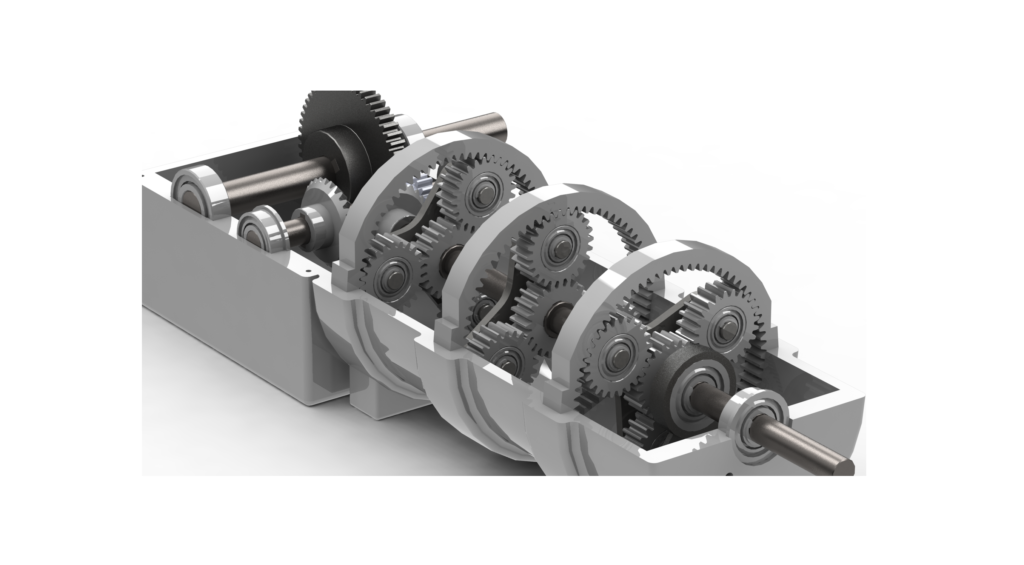
Can you explain the function of an epicyclic gear system in a helicopter’s rotor?
An epicyclic gear system, also known as a planetary gear system, plays a crucial function in a helicopter’s rotor. Here’s a detailed explanation:
1. Power Transmission:
The primary function of the epicyclic gear system in a helicopter’s rotor is to transmit power from the engine to the rotor blades. The system acts as a mechanical interface between the engine and the rotor, transferring torque and rotational motion effectively.
2. Gear Reduction:
The epicyclic gear system allows for gear reduction, which is essential in a helicopter rotor system. The high-speed rotation of the engine is converted into a lower rotational speed but increased torque at the rotor. This gear reduction enables the rotor blades to achieve the necessary lift and control, even with the high rotational speed of the engine.
3. Speed Control:
The epicyclic gear system provides speed control capabilities for the helicopter’s rotor. By adjusting the gear ratios within the system, the rotational speed of the rotor blades can be controlled. This speed control is vital for various flight maneuvers, such as takeoff, landing, hovering, and forward flight.
4. Torque Distribution:
An important function of the epicyclic gear system is to distribute torque evenly among the rotor blades. The system ensures that the torque generated by the engine is evenly distributed across all the blades, resulting in balanced lift and stable flight characteristics.
5. Autorotation:
The epicyclic gear system also enables autorotation, which is a critical safety feature in helicopters. During an engine failure, the system allows the rotor blades to continue rotating solely due to the upward airflow. This autorotation provides a controlled descent and allows the pilot to maintain some level of control over the helicopter’s flight path during an emergency.
6. Feathering:
Feathering refers to the ability to adjust the pitch angle of the rotor blades collectively. The epicyclic gear system incorporates mechanisms that enable feathering, allowing the pilot to change the pitch angle of all the blades simultaneously. This adjustment is used to optimize the helicopter’s performance in different flight conditions, such as reducing drag or increasing lift.
7. Mechanical Isolation:
The epicyclic gear system provides mechanical isolation between the engine and the rotor blades. This isolation helps dampen vibrations and reduces the transmission of engine-induced vibrations to the rotor system. It contributes to smoother operation, improved comfort, and reduced stress on the overall helicopter structure.
In summary, the function of an epicyclic gear system in a helicopter’s rotor includes power transmission, gear reduction, speed control, torque distribution, autorotation capability, feathering control, and mechanical isolation. These functions are critical for achieving efficient and safe helicopter operations, enabling lift generation, flight control, and maneuverability.
Can you explain the concept of planetary gear sets in epicyclic systems?
In epicyclic gear systems, planetary gear sets play a fundamental role. Here’s a detailed explanation of the concept:
1. Definition:
A planetary gear set consists of three main components: a central sun gear, multiple planet gears, and an outer ring gear, also known as the annular gear. The planet gears are typically mounted on a carrier, which allows them to rotate around the sun gear.
2. Gear Engagement:
The teeth of the planet gears mesh with both the sun gear and the annular gear. The sun gear is positioned at the center and is surrounded by the planet gears. The annular gear has internal teeth that engage with the planet gears, while its external teeth provide the outer boundary of the gear system.
3. Gear Motion:
The motion of a planetary gear set involves a combination of rotational and orbital motion. When the sun gear rotates, it causes the planet gears to rotate around their own axes while simultaneously orbiting around the sun gear.
4. Gear Ratios:
Planetary gear sets offer various gear ratios depending on how the components are held or driven. The gear ratio is determined by the number of teeth on the gears and the arrangement of the gear engagement. By fixing one component and driving another, different gear ratios can be achieved.
5. Gear Functions:
The arrangement and motion of planetary gear sets allow for a wide range of functions in epicyclic systems, including:
- Speed Reduction: By fixing the sun gear and rotating the carrier or annular gear, the output speed can be reduced compared to the input speed.
- Speed Increase: By fixing the carrier or annular gear and rotating the sun gear, the output speed can be increased compared to the input speed.
- Directional Changes: Changing the gear engagement arrangement allows reversing the direction of rotation between the input and output shafts.
- Torque Multiplication: The gear ratios in a planetary gear set enable torque multiplication, providing mechanical advantage between the input and output.
- Braking: By holding specific components, such as the sun gear or the carrier, the gear system can act as a brake, preventing rotation or controlling the speed of the output shaft.
Planetary gear sets are widely used in various applications, including automotive transmissions, gearboxes, power tools, and robotics. Their compact size, versatility in gear ratios, and ability to perform different functions make them essential components in many mechanical systems.
editor by CX 2023-10-07
China wholesaler Customized Machining Tractor/Planet/Planetary/Epicyclic CZPT Gear worm and wheel gear
Product Description
Customized Machining Tractor/Planet/Planetary/Epicyclic CHINAMFG Gear
Product Description
Major Products:
spur gear; worm gear; bevel gear; planetary gear; gear; metal gear; cycle gear; pinion gear; gear
manufacturing; helical gear; custom gear; spiral bevel gear; rack and pinion gear; mechanical
gears; transmission gears; rack gear; spiral gear; work gear; gear reducer; richmond gear;
hypoid gear; gear wheels; pulleys and gears; motive gear; gear teeth; truck gear; gear system;
involute gear.
|
Material |
Steel:Carbon steel/ Mild steel/ Cold roll steel/ Hot roll steel |
|
Surface Treatment |
Zinc plating, Powder, Passivation, Sand blasting, Brushing & ploshing etc. |
|
Processing Equipment |
Large laser cutter Bending machine Plasma cutting machine Punching machine Wire cutter CNC machining center CNC lathe Automatic lathe machine Milling machine Drilling machine |
|
Drawing Format |
pdf/.igs./.stp/x_t. etc. |
|
Drawing Format |
EXW, FOB, CIF |
|
Packing of Sheet Metal Stamping |
PE bag+carton box or other custom packaging |
|
Applications |
Auto Parts/Motocycle parts/Contruction Parts/Furniture Parts/Electronic Parts |
PRODUCT DESCRIPOTION
1. CHINAMFG wheel and pinion gears and spiral bevel gears for automobile rear axle, truck, tractor
front/rear axle and tool.
2. Raw material: 20CrMni \22CrMo \8620 \SCM420
Processing: Forging, normalizing, rough, machining, fine finishi, carburizing, tempering,
annealing, accurate grinding, matching and testing, packing.
3. The tooth surface is finished by lapping machine, the color will be silver gray
4. Hardness about surface: HRC58-62, internal: HRC35-40.
5. We can process gears according to customers drawing and samples.
Inspections:
3D instruments, 2D instruments, Projectors, Height Gauges, Inner diameter dial indicators, Dial gaues,
Thread and Pin gauges, Digital calipers,Micro calipers, Thickness testers, Hardness testers Roughness
testers, etc.( Detection accuracy to 0.001 millimetre )
| Mininum of Quantity | 100 Piece/Pieces |
| Unit Weight | 0.5kg~300kg |
| Price | FOB HangZhou,China,USD1.5~1.9 |
| Packing Details | Paper Box in Wooden Pallet |
| Delivery Time | One month |
| Payment Terms | L/C, T/T |
| Machining | CNC or |
| Supply Capacity | 50 Metric Tons per Month |
| Standard | DIN,ASTM,GOST,B |
Packaging & Shipping
Packing:
1: Shrink film+ bulk loading
2: Shrink film +Carton box + Pallet/ wooden case
3: PP + Wooden case
4: As per customers’ requirements or negotiated
FAQ
Q1: How can I get cnc spare parts sample?
1. Sample fee will be free if we have in stock, you just need to pay the shipping cost is OK.
2. The sample of your own design needs to pay for the mold set up charge. Samples production takes
5-7 working days after set up charge received & size drawing approval.
Q2: How to pay for the order?
There are 4 options to pay the order: Bank Transfer; Western Union; Paypal; Payoneer. Kindly choose
the most suitable way for you to arrange it.
Q3: What is the shipping method?
The samples were sent out by international airway express company like DHL, UPS, FedEx, TNT.
Usually takes around 5-7 working days (door to door service). We arrange goods shipment via sea
or air.
Q4: Can you give me help if my products are very urgent?
Yes, We can work overtime and add a few machines to produce these products if you need it urgently.
Q5: I want to keep our design in secret, can we CHINAMFG NDA?
Sure, we will not display any customers’ design or show to other people, we can CHINAMFG NDA.
You can look through our website to find your interest or email your any questions through
below approach! We will reply to you within 12 hours.
|
Shipping Cost:
Estimated freight per unit. |
To be negotiated |
|---|
| Application: | Motor, Electric Cars, Motorcycle, Machinery, Marine, Agricultural Machinery |
|---|---|
| Hardness: | Hardened Tooth Surface |
| Gear Position: | Internal Gear |
| Samples: |
US$ 4/Piece
1 Piece(Min.Order) | Order Sample machining gears
|
|---|
| Customization: |
Available
| Customized Request |
|---|
Can you explain how an epicyclic gear system handles torque distribution?
An epicyclic gear system, also known as a planetary gear system, is designed to handle torque distribution in an efficient and effective manner. Here’s a detailed explanation:
An epicyclic gear system consists of three main components: the sun gear, planet gears, and the ring gear. Each of these components plays a specific role in torque distribution:
1. Sun Gear:
The sun gear is the central gear in the system and receives torque input. It is typically connected to the power source, such as an engine or motor. The sun gear transfers torque to the other components of the system.
2. Planet Gears:
The planet gears are mounted on a carrier and rotate around the sun gear. They mesh with both the sun gear and the ring gear. The planet gears distribute torque between the sun gear and the ring gear, facilitating power transmission.
3. Ring Gear:
The ring gear is the outermost gear in the system and has internal teeth that engage with the planet gears. It is typically connected to the output shaft and transfers torque to the desired output, such as wheels in a vehicle or a generator in a wind turbine.
Here’s how the torque distribution works in an epicyclic gear system:
1. Torque Input:
The torque input is applied to the sun gear. As the sun gear rotates, it transfers torque to the planet gears.
2. Torque Distribution:
The planet gears receive torque from the sun gear and distribute it between the sun gear and the ring gear. Since the planet gears are meshed with both the sun gear and the ring gear, torque is transmitted from the sun gear to the ring gear through the planet gears.
3. Torque Multiplication or Reduction:
The torque distribution in an epicyclic gear system can be configured to provide either torque multiplication or torque reduction, depending on the arrangement of the gears. For example, if the sun gear is held stationary, the planet gears can rotate around the sun gear, causing the ring gear to rotate at a higher speed with increased torque. This configuration provides torque multiplication. Conversely, if the ring gear is held stationary, the sun gear can rotate, causing the planet gears to rotate in the opposite direction, resulting in torque reduction.
4. Even Torque Distribution:
An advantage of using an epicyclic gear system is that it facilitates even torque distribution among the planet gears. The multiple planet gears share the load, which helps distribute torque evenly across the gear system. This even torque distribution minimizes stress concentration on individual gear teeth, reducing wear and improving overall durability and reliability.
In summary, an epicyclic gear system handles torque distribution by transferring torque from the sun gear to the planet gears, which then distribute it between the sun gear and the ring gear. This configuration allows for torque multiplication or reduction and ensures even torque distribution among the planet gears, resulting in efficient power transmission and reliable operation.
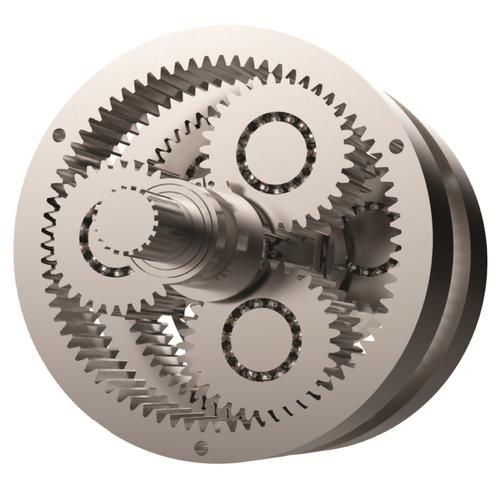
What are the challenges associated with designing and manufacturing epicyclic gears?
Designing and manufacturing epicyclic gears, also known as planetary gears, can present several challenges. Here’s a detailed explanation:
1. Complex Geometry:
Epicyclic gears have a complex geometry due to the arrangement of multiple gears and the interactions between the sun gear, planet gears, and ring gear. Designing the gear profiles and ensuring proper gear meshing requires advanced mathematical calculations and modeling techniques.
2. Gear Tooth Profile Design:
The design of the gear tooth profiles is critical to ensure smooth and efficient gear operation. Achieving the correct tooth profiles, such as involute or cycloidal, requires precise calculations and considerations for factors like tooth strength, backlash, and clearance.
3. Load Distribution and Gear Sizing:
Determining the appropriate number of planet gears and their sizing is crucial for achieving proper load distribution. The load distribution affects gear durability and performance. Designers must carefully analyze the load distribution and consider factors such as torque, speed, and material properties to ensure optimal gear sizing.
4. Manufacturing Tolerances:
Epicyclic gears have tight manufacturing tolerances due to their complex geometry and the need for precise gear meshing. Achieving the required tolerances during the manufacturing process can be challenging and may require specialized equipment and techniques.
5. Assembly and Alignment:
Proper assembly and alignment of the gear components are crucial for achieving smooth gear operation and minimizing wear. Aligning the gears with high accuracy during assembly can be challenging, especially in large gear systems where multiple components need to be precisely aligned.
6. Lubrication and Cooling:
Epicyclic gears require effective lubrication and cooling to ensure optimal performance and durability. Designing proper lubrication systems and ensuring effective cooling in the gear system can be challenging, especially in applications where gears operate under high loads and speeds.
7. Noise and Vibration:
Epicyclic gears can generate noise and vibrations during operation, which can be undesirable in certain applications. Designing gears that minimize noise and vibration requires careful consideration of factors such as gear tooth profiles, gear meshing, and damping techniques.
8. Cost and Complexity:
Designing and manufacturing epicyclic gears can be cost-intensive and complex compared to simpler gear systems. The complexity of the gear geometry, manufacturing tolerances, and assembly requirements can contribute to higher production costs and increased manufacturing challenges.
In summary, the challenges associated with designing and manufacturing epicyclic gears include complex geometry, gear tooth profile design, load distribution and gear sizing, manufacturing tolerances, assembly and alignment, lubrication and cooling, noise and vibration, as well as cost and complexity. Overcoming these challenges requires advanced design and manufacturing techniques, precision engineering, and careful consideration of various factors to ensure optimal gear performance and durability.
Can you explain the concept of planetary gear sets in epicyclic systems?
In epicyclic gear systems, planetary gear sets play a fundamental role. Here’s a detailed explanation of the concept:
1. Definition:
A planetary gear set consists of three main components: a central sun gear, multiple planet gears, and an outer ring gear, also known as the annular gear. The planet gears are typically mounted on a carrier, which allows them to rotate around the sun gear.
2. Gear Engagement:
The teeth of the planet gears mesh with both the sun gear and the annular gear. The sun gear is positioned at the center and is surrounded by the planet gears. The annular gear has internal teeth that engage with the planet gears, while its external teeth provide the outer boundary of the gear system.
3. Gear Motion:
The motion of a planetary gear set involves a combination of rotational and orbital motion. When the sun gear rotates, it causes the planet gears to rotate around their own axes while simultaneously orbiting around the sun gear.
4. Gear Ratios:
Planetary gear sets offer various gear ratios depending on how the components are held or driven. The gear ratio is determined by the number of teeth on the gears and the arrangement of the gear engagement. By fixing one component and driving another, different gear ratios can be achieved.
5. Gear Functions:
The arrangement and motion of planetary gear sets allow for a wide range of functions in epicyclic systems, including:
- Speed Reduction: By fixing the sun gear and rotating the carrier or annular gear, the output speed can be reduced compared to the input speed.
- Speed Increase: By fixing the carrier or annular gear and rotating the sun gear, the output speed can be increased compared to the input speed.
- Directional Changes: Changing the gear engagement arrangement allows reversing the direction of rotation between the input and output shafts.
- Torque Multiplication: The gear ratios in a planetary gear set enable torque multiplication, providing mechanical advantage between the input and output.
- Braking: By holding specific components, such as the sun gear or the carrier, the gear system can act as a brake, preventing rotation or controlling the speed of the output shaft.
Planetary gear sets are widely used in various applications, including automotive transmissions, gearboxes, power tools, and robotics. Their compact size, versatility in gear ratios, and ability to perform different functions make them essential components in many mechanical systems.
editor by CX 2023-09-28
China Professional Customized Machining Tractor/Planet/Planetary/Epicyclic CZPT Gear bevel gear set
Product Description
Customized Machining Tractor/Planet/Planetary/Epicyclic CHINAMFG Gear
Product Description
Major Products:
spur gear; worm gear; bevel gear; planetary gear; gear; metal gear; cycle gear; pinion gear; gear
manufacturing; helical gear; custom gear; spiral bevel gear; rack and pinion gear; mechanical
gears; transmission gears; rack gear; spiral gear; work gear; gear reducer; richmond gear;
hypoid gear; gear wheels; pulleys and gears; motive gear; gear teeth; truck gear; gear system;
involute gear.
|
Material |
Steel:Carbon steel/ Mild steel/ Cold roll steel/ Hot roll steel |
|
Surface Treatment |
Zinc plating, Powder, Passivation, Sand blasting, Brushing & ploshing etc. |
|
Processing Equipment |
Large laser cutter Bending machine Plasma cutting machine Punching machine Wire cutter CNC machining center CNC lathe Automatic lathe machine Milling machine Drilling machine |
|
Drawing Format |
pdf/.igs./.stp/x_t. etc. |
|
Drawing Format |
EXW, FOB, CIF |
|
Packing of Sheet Metal Stamping |
PE bag+carton box or other custom packaging |
|
Applications |
Auto Parts/Motocycle parts/Contruction Parts/Furniture Parts/Electronic Parts |
PRODUCT DESCRIPOTION
1. CHINAMFG wheel and pinion gears and spiral bevel gears for automobile rear axle, truck, tractor
front/rear axle and tool.
2. Raw material: 20CrMni \22CrMo \8620 \SCM420
Processing: Forging, normalizing, rough, machining, fine finishi, carburizing, tempering,
annealing, accurate grinding, matching and testing, packing.
3. The tooth surface is finished by lapping machine, the color will be silver gray
4. Hardness about surface: HRC58-62, internal: HRC35-40.
5. We can process gears according to customers drawing and samples.
Inspections:
3D instruments, 2D instruments, Projectors, Height Gauges, Inner diameter dial indicators, Dial gaues,
Thread and Pin gauges, Digital calipers,Micro calipers, Thickness testers, Hardness testers Roughness
testers, etc.( Detection accuracy to 0.001 millimetre )
| Mininum of Quantity | 100 Piece/Pieces |
| Unit Weight | 0.5kg~300kg |
| Price | FOB HangZhou,China,USD1.5~1.9 |
| Packing Details | Paper Box in Wooden Pallet |
| Delivery Time | One month |
| Payment Terms | L/C, T/T |
| Machining | CNC or |
| Supply Capacity | 50 Metric Tons per Month |
| Standard | DIN,ASTM,GOST,B |
Packaging & Shipping
Packing:
1: Shrink film+ bulk loading
2: Shrink film +Carton box + Pallet/ wooden case
3: PP + Wooden case
4: As per customers’ requirements or negotiated
FAQ
Q1: How can I get cnc spare parts sample?
1. Sample fee will be free if we have in stock, you just need to pay the shipping cost is OK.
2. The sample of your own design needs to pay for the mold set up charge. Samples production takes
5-7 working days after set up charge received & size drawing approval.
Q2: How to pay for the order?
There are 4 options to pay the order: Bank Transfer; Western Union; Paypal; Payoneer. Kindly choose
the most suitable way for you to arrange it.
Q3: What is the shipping method?
The samples were sent out by international airway express company like DHL, UPS, FedEx, TNT.
Usually takes around 5-7 working days (door to door service). We arrange goods shipment via sea
or air.
Q4: Can you give me help if my products are very urgent?
Yes, We can work overtime and add a few machines to produce these products if you need it urgently.
Q5: I want to keep our design in secret, can we CHINAMFG NDA?
Sure, we will not display any customers’ design or show to other people, we can CHINAMFG NDA.
You can look through our website to find your interest or email your any questions through
below approach! We will reply to you within 12 hours.
|
Shipping Cost:
Estimated freight per unit. |
To be negotiated |
|---|
| Application: | Motor, Electric Cars, Motorcycle, Machinery, Marine, Agricultural Machinery |
|---|---|
| Hardness: | Hardened Tooth Surface |
| Gear Position: | Internal Gear |
| Samples: |
US$ 4/Piece
1 Piece(Min.Order) | Order Sample machining gears
|
|---|
| Customization: |
Available
| Customized Request |
|---|
How do epicyclic gears contribute to gear reduction and speed increase?
Epicyclic gears, also known as planetary gears, play a significant role in achieving gear reduction and speed increase in various mechanical systems. Here’s a detailed explanation:
1. Gear Reduction:
Epicyclic gears can achieve gear reduction by utilizing their unique gear arrangement. The gear reduction is achieved by fixing or holding certain components of the gear system, such as the ring gear or the planet carrier, while the input and output shafts rotate. This causes the sun gear to drive the planet gears, resulting in a reduction of output speed and an increase in torque. The gear ratio formula for gear reduction in an epicyclic gear system is R = (1 + S) / (1 + R), where R is the number of teeth on the ring gear and S is the number of teeth on the sun gear.
2. Speed Increase:
Epicyclic gears can also be used to achieve speed increase when certain components of the gear system are held fixed or driven while the output shaft rotates. In this configuration, the input torque is divided among multiple planet gears, which rotate around the sun gear and drive the output shaft. This results in an increase in output speed and a decrease in torque. The gear ratio formula for speed increase in an epicyclic gear system is R = (1 + R) / (1 + S), where R is the number of teeth on the ring gear and S is the number of teeth on the sun gear.
3. Multiple Stages:
Epicyclic gears can achieve higher gear reduction or speed increase by incorporating multiple stages within a single gear system. Each stage consists of a set of gears, including a sun gear, planet gears, and a ring gear. The output of one stage becomes the input for the next stage, allowing for a cumulative effect on the gear ratio. By stacking multiple stages, the overall gear reduction or speed increase can be multiplied, providing a wide range of gear ratios to suit different application requirements.
4. Customizable Gear Ratios:
Epicyclic gears offer flexibility in achieving customizable gear ratios. By varying the number of teeth on the gears or using different combinations of gears, specific gear ratios can be obtained to meet the needs of the application. This customization capability allows for optimized speed control, gear reduction, and torque multiplication, making epicyclic gears versatile in a wide range of mechanical systems.
5. Compact Design:
Epicyclic gears contribute to gear reduction and speed increase while maintaining a compact design. The concentric arrangement of gears and the ability to achieve multiple gear stages within a single gear system result in a smaller overall footprint compared to other gear arrangements. This compact design is particularly useful in space-constrained applications where achieving high gear reduction or speed increase is essential.
In summary, epicyclic gears contribute to gear reduction and speed increase through their unique gear arrangement, multiple stages, customizable gear ratios, and compact design. These features make them widely used in various mechanical systems, such as automotive transmissions, industrial machinery, and robotics, where efficient power transmission and speed control are crucial.
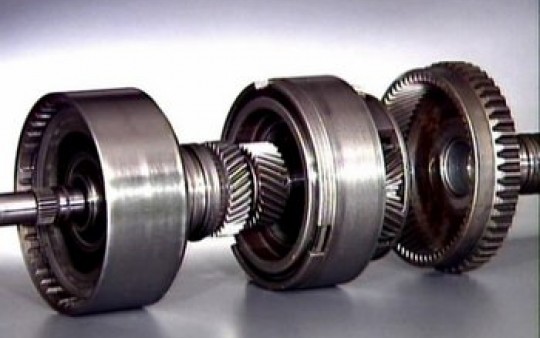
How do epicyclic gears contribute to reducing gear wear and noise?
Epicyclic gears, also known as planetary gears, offer several advantages that contribute to reducing gear wear and noise. Here’s a detailed explanation:
1. Load Distribution:
The arrangement of multiple planet gears in an epicyclic gear system helps distribute the load evenly across the gear teeth. This load distribution minimizes stress concentration on individual gear teeth, reducing the risk of wear and fatigue failure. By sharing the load, epicyclic gears can handle higher torque levels while reducing the wear on specific gear teeth.
2. Increased Tooth Contact Ratio:
Epicyclic gears typically have a higher tooth contact ratio compared to other gear types, such as spur or helical gears. The tooth contact ratio refers to the number of teeth in contact at any given time. A higher tooth contact ratio results in a smoother distribution of load and reduces localized contact stresses. This helps to minimize wear and noise generation during gear operation.
3. Balanced Loading:
The design of epicyclic gears allows for balanced loading of the gear teeth. The load is distributed among multiple planet gears, and each gear tooth engages with multiple teeth on both the sun gear and the ring gear simultaneously. This balanced loading helps to minimize tooth deflection and backlash, reducing wear and noise generation.
4. Lubrication:
Epicyclic gears benefit from effective lubrication due to their design. The gear teeth are constantly immersed in the lubricant, which helps reduce friction and wear. Proper lubrication also helps to dampen vibrations and reduce noise generated during gear operation.
5. Controlled Speed and Load Transitions:
Epicyclic gears can provide smooth speed and load transitions due to their ability to change gear ratios. When transitioning from one gear ratio to another, the gear engagement can be carefully controlled to minimize sudden shocks or impacts, which can contribute to wear and noise. The controlled speed and load transitions in epicyclic gears help reduce gear wear and noise levels.
6. Precision Manufacturing:
Epicyclic gears are often manufactured with high precision to ensure accurate gear meshing and minimize manufacturing errors. Precise gear manufacturing helps to maintain proper alignment and minimize tooth misalignment, which can lead to increased wear and noise.
In summary, the load distribution, increased tooth contact ratio, balanced loading, lubrication, controlled speed and load transitions, and precision manufacturing of epicyclic gears all contribute to reducing gear wear and noise. These factors make epicyclic gears a favorable choice in applications where minimizing wear and noise levels is important.
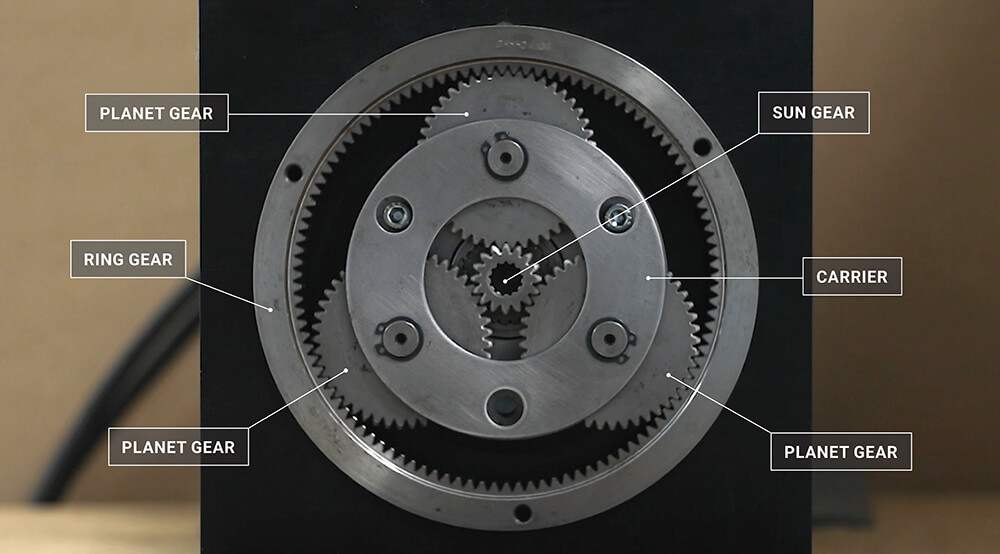
How does an epicyclic gear differ from other types of gears?
An epicyclic gear, also known as a planetary gear, exhibits several distinguishing features that set it apart from other types of gears. Here’s a detailed explanation of the differences:
1. Gear Arrangement:
An epicyclic gear system consists of a central sun gear, multiple planet gears, and an outer ring gear, also known as the annular gear. This arrangement differs from other gear types like spur gears, helical gears, or bevel gears, which typically involve meshing between two parallel or intersecting shafts.
2. Gear Motion:
The motion of an epicyclic gear system is characterized by the planet gears rotating while simultaneously orbiting around the sun gear. This combination of rotational and orbital motion is unique to epicyclic gears and allows them to achieve different gear ratios and functions.
3. Gear Ratios:
Epicyclic gears offer a wide range of gear ratios by varying the engagement of the sun gear, planet gears, and annular gear. This versatility in gear ratios is not typically found in other gear types, which often have fixed ratios determined by the number of teeth on the gears.
4. Compactness:
Epicyclic gears are known for their compact design. The arrangement of the gears allows for a relatively large gear reduction or multiplication within a compact space. This compactness makes them suitable for applications where space is limited, such as in automotive transmissions.
5. Functions and Applications:
Epicyclic gears offer various functions beyond basic speed reduction or increase. They can achieve torque multiplication, directional changes, and braking capabilities, providing versatility in mechanical systems. These unique functions make epicyclic gears well-suited for applications ranging from automatic transmissions and power tools to robotics and aerospace systems.
6. Complexity:
Compared to simpler gear types like spur gears, epicyclic gears can be more complex and require precise design and manufacturing. The interaction between the sun gear, planet gears, and annular gear involves multiple points of contact, requiring careful consideration of gear profiles, clearances, and alignment.
In summary, an epicyclic gear stands out from other types of gears due to its specific gear arrangement, motion characteristics, versatile gear ratios, compactness, unique functions, and complexity. Its ability to provide multiple gear ratios and perform various functions makes it a valuable choice in many mechanical systems.
editor by CX 2023-09-28
China best HD469-2510016 4110001187016 4110702806012 Axle Shaft Gear for CZPT Lgmg Mt86 Mt86h Mt95 Mt96L Tonly 875 875b 883 885 gear ratio calculator
Product Description
Product Description
HD469-251
FAQ
-
1. How long have you been in this business?
We have 17 years of industry experience. Mine truck parts only!
-
2.Do you have enough products?
10000 kinds of varieties. ONE STOP SHOPPING of mining Truck Parts.
-
3.Can you be trusted?
Our long-term good cooperation with 100+ customers around the world is the best proof.
-
4.Can there be an account period?
O/A 90 DAYS
-
5.Are you a factory or a trading company?
trading company. we have 2000+Factory perfect supply chain. Strictly check quality and control risk for you.
-
6.How long will the delivery?
Within a week.
-
7.Is there a discount for new customers?
New customers get up to 10% off their first order.
| After-sales Service: | on-Line Service |
|---|---|
| Condition: | New |
| Axle Number: | 3 |
| Application: | Truck |
| Certification: | DIN, ISO |
| Material: | Steel |
| Samples: |
US$ 50/Piece
1 Piece(Min.Order) | |
|---|
| Customization: |
Available
| Customized Request |
|---|
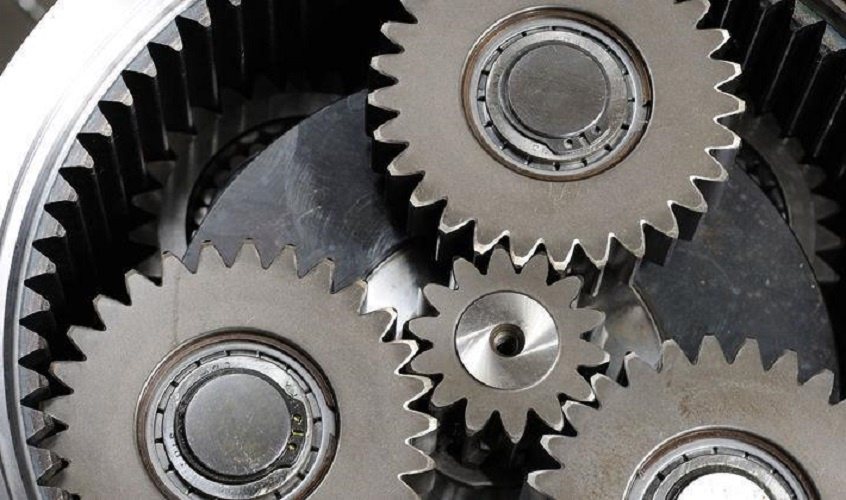
Can you provide examples of vehicles or devices that use epicyclic gears?
Epicyclic gears, also known as planetary gears, are employed in various vehicles and devices for efficient power transmission and control. Here are some examples:
1. Automotive Transmissions:
Epicyclic gears are extensively used in automotive transmissions, including automatic transmissions and continuously variable transmissions (CVT). They allow for smooth gear shifting, gear reduction, and torque multiplication, enhancing vehicle performance and fuel efficiency.
2. Wind Turbines:
Many wind turbines utilize epicyclic gear systems to convert the low-speed rotation of the wind turbine blades into high-speed rotation required by the generator. Epicyclic gears enable efficient power transmission, allowing wind turbines to generate electricity effectively.
3. Robotics:
Epicyclic gears find applications in robotics for precise motion control and torque transmission. They are used in robotic arms, humanoid robots, and other robotic mechanisms where compactness and versatility are essential.
4. Industrial Machinery:
Various industrial machinery, such as conveyors, mixers, and machine tools, incorporate epicyclic gears for power transmission and speed control. Epicyclic gear systems provide reliable and efficient operation in demanding industrial environments.
5. Aircraft Systems:
Epicyclic gears are employed in aircraft systems, including helicopter transmissions and auxiliary power units (APUs). They enable gear reduction, torque multiplication, and precise control in critical aircraft operations.
6. Power Tools:
Many power tools, such as drills, grinders, and impact wrenches, utilize epicyclic gears to deliver high torque and variable speed control. Epicyclic gear systems enhance the performance and usability of power tools across various applications.
7. Bicycle Hubs:
Some advanced bicycle hubs employ epicyclic gears for gear shifting and multiple gear ratios. These gear systems allow cyclists to change gears smoothly, adapt to different terrains, and optimize pedaling efficiency.
8. Marine Propulsion Systems:
Epicyclic gears are utilized in marine propulsion systems, including marine transmissions and outboard motors. They enable efficient power transfer and speed control in marine vessels.
These are just a few examples of vehicles and devices that incorporate epicyclic gears. Their widespread use across various industries is a testament to the advantages and versatility offered by epicyclic gear systems.
How do epicyclic gears maintain smooth operation during gear shifts?
Epicyclic gears, also known as planetary gears, are designed to maintain smooth operation during gear shifts. Here’s a detailed explanation:
1. Overlapping Engagement:
During gear shifts, epicyclic gears often utilize overlapping engagement, which means that multiple gears are engaged simultaneously for a brief period. This overlapping engagement allows for a gradual transition of torque from one gear to another, reducing sudden shocks or impacts that can cause jerky movements or noise.
2. Synchronizers or Clutches:
In certain applications, synchronizers or clutches are used in conjunction with epicyclic gears to facilitate smooth gear shifts. Synchronizers help match the speeds of the gears being engaged, while clutches enable gradual engagement and disengagement of gears. These mechanisms ensure that the gear shifts are seamless and minimize any jolts or vibrations.
3. Controlled Torque Transfer:
Epicyclic gears allow for controlled torque transfer during gear shifts. By manipulating the arrangement of the gears, such as holding a specific gear stationary, the torque can be gradually transferred from one gear to another. This controlled torque transfer helps maintain smooth operation during gear shifts.
4. Proper Gear Design:
The design of epicyclic gears plays a crucial role in maintaining smooth operation during gear shifts. Factors such as gear tooth profile, backlash, and clearance are carefully considered to minimize any sudden changes in contact and minimize gear meshing noise. Well-designed gears ensure smooth and efficient power transmission during gear shifts.
5. Lubrication and Damping:
Effective lubrication of the gear system helps reduce friction and wear during gear shifts. It also aids in damping vibrations and noise generated during the shifting process. Proper lubrication and damping techniques ensure smooth operation and minimize any disturbances during gear shifts.
6. Precise Manufacturing and Assembly:
Precision manufacturing and assembly of epicyclic gears are essential for maintaining smooth operation during gear shifts. Accurate gear tooth profiles, tight manufacturing tolerances, and precise gear alignment help ensure proper gear meshing and minimize any irregularities that can cause jolts or noise during gear shifts.
In summary, epicyclic gears maintain smooth operation during gear shifts through overlapping engagement, the use of synchronizers or clutches, controlled torque transfer, proper gear design, lubrication and damping techniques, as well as precise manufacturing and assembly. These factors work together to ensure seamless gear shifting, minimize shocks or impacts, and provide a smooth and comfortable driving experience in various applications.
What is the role of a sun gear, planet gears, and ring gear in an epicyclic arrangement?
In an epicyclic gear arrangement, the sun gear, planet gears, and ring gear each have specific roles and functions. Here’s a detailed explanation:
1. Sun Gear:
The sun gear is the central gear component in an epicyclic arrangement. Its primary role is to provide the input rotational motion or power to the gear system. The sun gear is typically located at the center and is surrounded by the planet gears. It engages with the planet gears through meshing teeth, transmitting rotational force to them.
2. Planet Gears:
The planet gears are multiple gears that revolve around the sun gear in an epicyclic arrangement. They are mounted on a carrier, which holds and supports the planet gears. The planet gears mesh with both the sun gear and the ring gear. As the sun gear rotates, it causes the planet gears to rotate around their own axes while simultaneously orbiting around the sun gear. The planet gears transmit the rotational motion and torque from the sun gear to the ring gear.
3. Ring Gear:
The ring gear, also known as the annular gear or the outer gear, is the outermost gear component in an epicyclic arrangement. It has internal teeth that mesh with the planet gears. The ring gear provides the outer boundary of the gear system and engages with the planet gears, transferring the rotational motion and torque from the planet gears to the output or the next stage of the gear system. In some arrangements, the ring gear is fixed or held stationary, while in others, it can rotate.
The combination and interaction of the sun gear, planet gears, and ring gear in an epicyclic arrangement enable various gear functions, such as gear reduction, torque multiplication, speed control, and directional changes. The arrangement and engagement of these gears determine the gear ratios and overall performance of the gear system.
editor by CX 2023-09-12
China factory Precision Transmission Gear Motor Wheel Track Drive Reduction NEMA 34 Speed Reducer Inline Epicyclic Gearhead Planetary Gearbox bevel spiral gear
Product Description
precision transmission gear motor wheel track drive reduction nema 34 speed reducer inline epicyclic gearhead planetary gearbox
| Application: | Motor, Electric Cars, Motorcycle, Machinery, Marine, Agricultural Machinery, Car |
|---|---|
| Function: | Distribution Power, Clutch, Change Drive Torque, Change Drive Direction, Speed Changing, Speed Reduction, Speed Increase |
| Layout: | Coaxial |
| Hardness: | Hardened Tooth Surface |
| Installation: | Horizontal Type |
| Step: | Three-Step |
| Samples: |
US$ 9999/Piece
1 Piece(Min.Order) | |
|---|
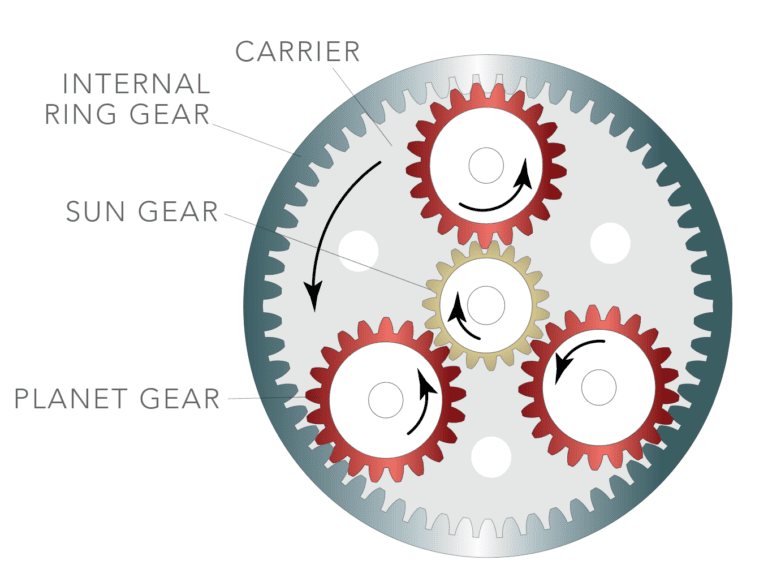
How do epicyclic gear systems provide different gear ratios within a compact design?
Epicyclic gear systems, also known as planetary gear systems, offer the advantage of providing different gear ratios while maintaining a compact design. Here’s a detailed explanation:
Epicyclic gear systems achieve different gear ratios through the interaction of the sun gear, planet gears, and ring gear. The arrangement and engagement of these gears determine the resulting gear ratios. Here’s how it works:
1. Sun Gear and Ring Gear Sizes:
The gear ratio is influenced by the relative sizes of the sun gear and the ring gear. The number of teeth on these gears determines their effective radius and, consequently, the gear ratio. For example, a larger sun gear or a smaller ring gear will result in a higher gear ratio, providing gear reduction.
2. Planet Gear Engagement:
The planet gears in an epicyclic gear system engage with both the sun gear and the ring gear. The number of teeth on the planet gears affects the gear ratio as well. By altering the number of teeth on the planet gears, different gear ratios can be achieved. Increasing the number of teeth on the planet gears compared to the sun gear or the ring gear will result in a higher gear ratio.
3. Gear Arrangement:
The arrangement of the sun gear, planet gears, and ring gear also plays a role in providing different gear ratios. In a basic epicyclic gear system, the planet gears are evenly spaced around the sun gear and engage with the internal teeth of the ring gear. However, by modifying the arrangement, such as using multiple sets of planet gears or incorporating additional gears, more complex gear ratios can be achieved.
4. Multiple Stages:
Epicyclic gear systems can also utilize multiple stages to further expand the range of available gear ratios. Multiple stages involve connecting multiple sets of epicyclic gear systems in series. Each stage can have its own gear ratio, and by combining the gear ratios of each stage, a wide range of overall gear ratios can be achieved.
5. Compact Design:
Epicyclic gear systems offer a compact design due to the coaxial arrangement of the sun gear, planet gears, and ring gear. The planet gears are mounted on a carrier, which revolves around the sun gear while engaging with the ring gear. This arrangement allows for a high gear reduction or multiplication within a relatively small space, making epicyclic gears well-suited for applications where size and weight constraints are critical.
Overall, through the careful selection of gear sizes, gear engagement, gear arrangement, and the possibility of multiple stages, epicyclic gear systems provide different gear ratios while maintaining a compact design. This versatility in gear ratios makes them highly adaptable to a wide range of applications across various industries.
Can you explain the function of an epicyclic gear system in a helicopter’s rotor?
An epicyclic gear system, also known as a planetary gear system, plays a crucial function in a helicopter’s rotor. Here’s a detailed explanation:
1. Power Transmission:
The primary function of the epicyclic gear system in a helicopter’s rotor is to transmit power from the engine to the rotor blades. The system acts as a mechanical interface between the engine and the rotor, transferring torque and rotational motion effectively.
2. Gear Reduction:
The epicyclic gear system allows for gear reduction, which is essential in a helicopter rotor system. The high-speed rotation of the engine is converted into a lower rotational speed but increased torque at the rotor. This gear reduction enables the rotor blades to achieve the necessary lift and control, even with the high rotational speed of the engine.
3. Speed Control:
The epicyclic gear system provides speed control capabilities for the helicopter’s rotor. By adjusting the gear ratios within the system, the rotational speed of the rotor blades can be controlled. This speed control is vital for various flight maneuvers, such as takeoff, landing, hovering, and forward flight.
4. Torque Distribution:
An important function of the epicyclic gear system is to distribute torque evenly among the rotor blades. The system ensures that the torque generated by the engine is evenly distributed across all the blades, resulting in balanced lift and stable flight characteristics.
5. Autorotation:
The epicyclic gear system also enables autorotation, which is a critical safety feature in helicopters. During an engine failure, the system allows the rotor blades to continue rotating solely due to the upward airflow. This autorotation provides a controlled descent and allows the pilot to maintain some level of control over the helicopter’s flight path during an emergency.
6. Feathering:
Feathering refers to the ability to adjust the pitch angle of the rotor blades collectively. The epicyclic gear system incorporates mechanisms that enable feathering, allowing the pilot to change the pitch angle of all the blades simultaneously. This adjustment is used to optimize the helicopter’s performance in different flight conditions, such as reducing drag or increasing lift.
7. Mechanical Isolation:
The epicyclic gear system provides mechanical isolation between the engine and the rotor blades. This isolation helps dampen vibrations and reduces the transmission of engine-induced vibrations to the rotor system. It contributes to smoother operation, improved comfort, and reduced stress on the overall helicopter structure.
In summary, the function of an epicyclic gear system in a helicopter’s rotor includes power transmission, gear reduction, speed control, torque distribution, autorotation capability, feathering control, and mechanical isolation. These functions are critical for achieving efficient and safe helicopter operations, enabling lift generation, flight control, and maneuverability.
What is the role of a sun gear, planet gears, and ring gear in an epicyclic arrangement?
In an epicyclic gear arrangement, the sun gear, planet gears, and ring gear each have specific roles and functions. Here’s a detailed explanation:
1. Sun Gear:
The sun gear is the central gear component in an epicyclic arrangement. Its primary role is to provide the input rotational motion or power to the gear system. The sun gear is typically located at the center and is surrounded by the planet gears. It engages with the planet gears through meshing teeth, transmitting rotational force to them.
2. Planet Gears:
The planet gears are multiple gears that revolve around the sun gear in an epicyclic arrangement. They are mounted on a carrier, which holds and supports the planet gears. The planet gears mesh with both the sun gear and the ring gear. As the sun gear rotates, it causes the planet gears to rotate around their own axes while simultaneously orbiting around the sun gear. The planet gears transmit the rotational motion and torque from the sun gear to the ring gear.
3. Ring Gear:
The ring gear, also known as the annular gear or the outer gear, is the outermost gear component in an epicyclic arrangement. It has internal teeth that mesh with the planet gears. The ring gear provides the outer boundary of the gear system and engages with the planet gears, transferring the rotational motion and torque from the planet gears to the output or the next stage of the gear system. In some arrangements, the ring gear is fixed or held stationary, while in others, it can rotate.
The combination and interaction of the sun gear, planet gears, and ring gear in an epicyclic arrangement enable various gear functions, such as gear reduction, torque multiplication, speed control, and directional changes. The arrangement and engagement of these gears determine the gear ratios and overall performance of the gear system.
editor by CX 2023-09-11
China manufacturer Zero Backlash Brushless Gear Sun Unit Motor Gearhead NEMA34 17 CNC Wheel Drive Servo Stepper Small Micro Mini Epicyclic High-Precision Planetary Gearbox with Best Sales
Product Description
Zero Backlash Brushless Gear Sun Unit Motor Gearhead NEMA34 17 CNC Wheel Drive Servo Stepper Small Micro Mini Epicyclic High-Precision Planetary Gearbox
Product Description
The precision planetary gear box has the advantages of high precision, light weight, small volume, large transmission range, high efficiency, smooth operation, low noise, economy and practicality, and easy installation. Matching NEMA17, NEMA23, NEMA34 and NEMA42 stepper motors, brushless motors and servo motors. Widely applicable to automation equipment, lithium battery equipment, etc
Servo planetary reducer is another name for high-precision planetary reducer in the industry. Its main transmission structure is: planetary gear, sun gear, inner gear ring. Compared with other reducers, the servo planetary reducer has the characteristics of high rigidity, high accuracy (within 1 point for a single stage), high transmission efficiency (97% – 98% for a single stage), high torque/volume ratio, life-long maintenance free, etc. Most of them are installed on stepping motor and servo motor to reduce speed, increase torque and match inertia
| Series | Introduction | Series | Introduction |
| BAB series |
|
BABR Series |
|
|
BAD Series
|
|
BADR Series |
|
|
BAE Series |
|
BAF Series |
|
|
BPG/BPGA Series |
|
Advantages Planetary reducer
Precision planetary reducer is another name for planetary reducer in the industry. Its main transmission structure is planetary gear, sun gear and inner gear ring. Precision planetary reducer is widely used in servo motor, stepping motor, dc motor and other transmission systems because of its small size, high transmission efficiency, wide deceleration range, high accuracy and many other advantages.
Characteristics of precision planetary reducer
1. High torque and impact resistance: the planetary reducer has more than 6 uniform large loads on the surface of the transmission gear. Several transmission gears in the planetary reducer are symmetrical and bear the transient impact load, so that the planetary reducer can withstand the impact of large torque, and its own and rolling bearing parts will not be damaged due to long-term load cracking.
2. Small size and light force: the planetary reducer is small in size, light in weight and light in appearance, which makes the design scheme more valuable. The structure of the planetary reducer can also be repeatedly connected according to the required number of segments, and independently composed of multiple segments.
3. High efficiency and low backlash: because each set of transmission gear in the reducer can only be contacted by 3 gears, when the transmission system has the same torque, the journal must be stressed, so when designing the gear, a larger modification coefficient and a thinner thickness must be selected. The larger the gear module is, the larger the offset tolerance between transmission gears is, the larger the relative clearance between transmission gears is, and the total backlash between transmission ratios will also increase.
4. The precision planetary reducer is characterized by high rigidity, high precision (within 1 point for a single stage), high transmission efficiency (97% – 98% for a single stage), high torque/volume ratio, life-long maintenance free, etc.
Optional output terminal form
Application
Company Profile
HangZhou ever power is a manufacturer specializing in R&D, production and sales of high-precision planetary reducer, high-precision platform reducer and special reducer. Our team is good at a variety of internal and external gear processing and solutions. We have summarized a set of “internal quality management system” to ensure the relative accuracy of the combined parts and provide a high qualification rate and high efficiency guarantee for the delivery of the complete machine.
We use advanced computer software for design and demonstration, and combine years of experience in mechanical transmission and motion control to provide global motion and control solutions. Quality is the foundation of enterprise survival. We provide stable and high-quality products for the market and provide more optimized automation solutions. We always take “user demand” as our business purpose, “scientific and technological innovation” as the basis of our development, and implement the operation of ISO quality management system in all aspects of our company. Our products are characterized by high precision, large bearing torque, long service life, low noise, smooth operation, strong versatility and maintenance free.
Our products are widely used in aerospace, CNC machine tools, cutting and welding equipment, textile printing and dyeing machinery, packaging machinery, food machinery, ships, radar, data communication systems, robots, robotic arms, composite material equipment, precision testing instruments, testing machines, plastic machinery, glass machinery, coal mining machinery, lifting machinery, metallurgical machinery, engineering machinery and other fields. The process of our pursuit of success is the process of constantly sublimating our relationship with you.
| Application: | Motor, Electric Cars, Motorcycle, Machinery, Marine, Toy, Agricultural Machinery, Car |
|---|---|
| Function: | Distribution Power, Clutch, Change Drive Torque, Change Drive Direction, Speed Changing, Speed Reduction, Speed Increase |
| Layout: | Three-Ring |
| Hardness: | Hardened Tooth Surface |
| Installation: | Torque Arm Type |
| Step: | Stepless |
| Samples: |
US$ 9999/Piece
1 Piece(Min.Order) | |
|---|
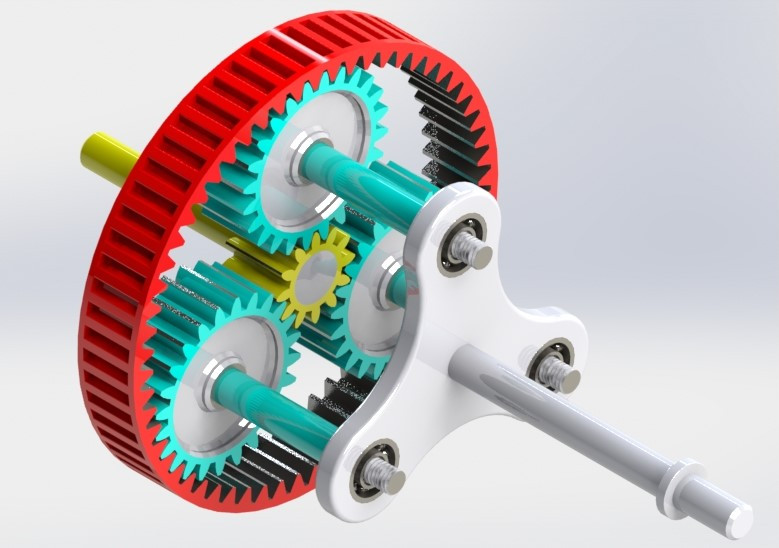
What are the advantages of using epicyclic gears in automotive transmissions?
Epicyclic gears, also known as planetary gears, offer several advantages when used in automotive transmissions. Here’s a detailed explanation:
1. Compact Design:
Epicyclic gears provide a compact design, allowing automotive transmissions to be more space-efficient compared to other gear arrangements. This is particularly beneficial in modern vehicles where available space is limited. The compactness of epicyclic gears enables manufacturers to design smaller and lighter transmissions, resulting in overall weight reduction and improved vehicle fuel efficiency.
2. Gear Ratio Flexibility:
Epicyclic gears offer a wide range of gear ratios through the combination of the sun gear, planet gears, and ring gear. This flexibility allows automotive transmissions to provide multiple gear ratios, enabling smooth gear shifting and optimal engine performance across various driving conditions. Epicyclic gear systems can incorporate different gear sets and stages to achieve specific gear ratios, enhancing the vehicle’s acceleration, towing capabilities, and fuel economy.
3. Efficient Power Transmission:
The design of epicyclic gears facilitates efficient power transmission. The multiple planet gears distribute torque evenly across the gear system, minimizing power losses and improving overall transmission efficiency. This efficiency is particularly important in automotive transmissions, where efficient power transfer is vital for the vehicle’s performance and fuel economy.
4. Torque Multiplication and Gear Reduction:
Epicyclic gears can be configured to provide torque multiplication or gear reduction, depending on the arrangement of the gears. This capability is utilized in automotive transmissions to increase torque output during low-speed or high-load conditions, such as when starting from a standstill or climbing steep hills. Torque multiplication improves the vehicle’s drivability and towing capacity, enhancing its overall performance.
5. Smooth and Seamless Gear Shifts:
Epicyclic gears contribute to smooth and seamless gear shifts in automotive transmissions. The design allows for overlapping engagement of gears during gear shifting, minimizing the interruption of power delivery and providing a smoother transition between gears. This results in improved driving comfort and reduced wear on transmission components.
6. Durability and Reliability:
Epicyclic gears are known for their durability and reliability, making them well-suited for automotive applications. The design distributes load and wear among multiple planet gears, reducing stress on individual gear teeth and prolonging the lifespan of the transmission. Additionally, the compact and enclosed nature of the gear system provides protection against contaminants and external elements, further enhancing its reliability.
These advantages make epicyclic gears a popular choice in automotive transmissions, as they contribute to improved vehicle performance, fuel efficiency, and overall driving experience.
How do epicyclic gears maintain smooth operation during gear shifts?
Epicyclic gears, also known as planetary gears, are designed to maintain smooth operation during gear shifts. Here’s a detailed explanation:
1. Overlapping Engagement:
During gear shifts, epicyclic gears often utilize overlapping engagement, which means that multiple gears are engaged simultaneously for a brief period. This overlapping engagement allows for a gradual transition of torque from one gear to another, reducing sudden shocks or impacts that can cause jerky movements or noise.
2. Synchronizers or Clutches:
In certain applications, synchronizers or clutches are used in conjunction with epicyclic gears to facilitate smooth gear shifts. Synchronizers help match the speeds of the gears being engaged, while clutches enable gradual engagement and disengagement of gears. These mechanisms ensure that the gear shifts are seamless and minimize any jolts or vibrations.
3. Controlled Torque Transfer:
Epicyclic gears allow for controlled torque transfer during gear shifts. By manipulating the arrangement of the gears, such as holding a specific gear stationary, the torque can be gradually transferred from one gear to another. This controlled torque transfer helps maintain smooth operation during gear shifts.
4. Proper Gear Design:
The design of epicyclic gears plays a crucial role in maintaining smooth operation during gear shifts. Factors such as gear tooth profile, backlash, and clearance are carefully considered to minimize any sudden changes in contact and minimize gear meshing noise. Well-designed gears ensure smooth and efficient power transmission during gear shifts.
5. Lubrication and Damping:
Effective lubrication of the gear system helps reduce friction and wear during gear shifts. It also aids in damping vibrations and noise generated during the shifting process. Proper lubrication and damping techniques ensure smooth operation and minimize any disturbances during gear shifts.
6. Precise Manufacturing and Assembly:
Precision manufacturing and assembly of epicyclic gears are essential for maintaining smooth operation during gear shifts. Accurate gear tooth profiles, tight manufacturing tolerances, and precise gear alignment help ensure proper gear meshing and minimize any irregularities that can cause jolts or noise during gear shifts.
In summary, epicyclic gears maintain smooth operation during gear shifts through overlapping engagement, the use of synchronizers or clutches, controlled torque transfer, proper gear design, lubrication and damping techniques, as well as precise manufacturing and assembly. These factors work together to ensure seamless gear shifting, minimize shocks or impacts, and provide a smooth and comfortable driving experience in various applications.
What is the role of a sun gear, planet gears, and ring gear in an epicyclic arrangement?
In an epicyclic gear arrangement, the sun gear, planet gears, and ring gear each have specific roles and functions. Here’s a detailed explanation:
1. Sun Gear:
The sun gear is the central gear component in an epicyclic arrangement. Its primary role is to provide the input rotational motion or power to the gear system. The sun gear is typically located at the center and is surrounded by the planet gears. It engages with the planet gears through meshing teeth, transmitting rotational force to them.
2. Planet Gears:
The planet gears are multiple gears that revolve around the sun gear in an epicyclic arrangement. They are mounted on a carrier, which holds and supports the planet gears. The planet gears mesh with both the sun gear and the ring gear. As the sun gear rotates, it causes the planet gears to rotate around their own axes while simultaneously orbiting around the sun gear. The planet gears transmit the rotational motion and torque from the sun gear to the ring gear.
3. Ring Gear:
The ring gear, also known as the annular gear or the outer gear, is the outermost gear component in an epicyclic arrangement. It has internal teeth that mesh with the planet gears. The ring gear provides the outer boundary of the gear system and engages with the planet gears, transferring the rotational motion and torque from the planet gears to the output or the next stage of the gear system. In some arrangements, the ring gear is fixed or held stationary, while in others, it can rotate.
The combination and interaction of the sun gear, planet gears, and ring gear in an epicyclic arrangement enable various gear functions, such as gear reduction, torque multiplication, speed control, and directional changes. The arrangement and engagement of these gears determine the gear ratios and overall performance of the gear system.
editor by CX 2023-09-08
China Custom Planetary Gearbox Gear System Speed Reducer Motor Wheel Track Drive Reduction Gearhead Transmission Epicyclic Inline Interchange with Precision Gearbox gear patrol
Product Description
Planetary Gearbox gear system speed reducer motor wheel track drive reduction gearhead transmission epicyclic inline interchange with precision gearbox
What is Planetary Gearbox?
A planetary gearbox is a type of gear train that uses a central gear, called the sun gear, and a ring gear, called the annulus gear. The sun gear is surrounded by a number of smaller gears, called planet gears, which are mounted on a carrier. The planet gears mesh with both the sun gear and the annulus gear.
The planetary gearbox can be used to transmit power from the sun gear to the annulus gear, or vice versa. The direction of rotation of the output shaft can be the same as the direction of rotation of the input shaft, or opposite. The speed of the output shaft can be greater than, less than, or equal to the speed of the input shaft.
The planetary gearbox is a compact and efficient way to transmit power. It is often used in applications where space is limited, such as in automobiles, robotics, and machine tools.
Here are some of the advantages of using planetary gearboxes:
- Compact size. Planetary gearboxes are very compact, which makes them ideal for applications where space is limited.
- High efficiency. Planetary gearboxes are very efficient, which means that they can transmit power with minimal losses.
- Versatility. Planetary gearboxes can be used in a wide variety of applications, which makes them a versatile and reliable choice for many applications.
Here are some of the disadvantages of using planetary gearboxes:
- Cost. Planetary gearboxes can be more expensive than other types of gear trains.
- Noise. Planetary gearboxes can be noisy, especially at high speeds.
- Maintenance. Planetary gearboxes require regular maintenance to ensure that they operate properly.
| Application: | Motor, Electric Cars, Motorcycle, Machinery, Marine, Toy, Agricultural Machinery, Car |
|---|---|
| Function: | Distribution Power, Clutch, Change Drive Torque, Change Drive Direction, Speed Changing, Speed Reduction, Speed Increase |
| Layout: | Three-Ring |
| Hardness: | Hardened Tooth Surface |
| Installation: | Torque Arm Type |
| Step: | Stepless |
| Samples: |
US$ 9999/Piece
1 Piece(Min.Order) | |
|---|
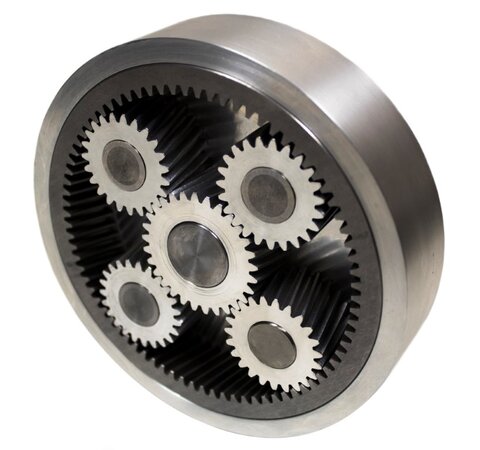
What are the benefits of using epicyclic gears in wind turbines?
Epicyclic gears, also known as planetary gears, offer several benefits when used in wind turbines. Here’s a detailed explanation:
1. Compact and Lightweight Design:
Epicyclic gears provide a compact and lightweight design for wind turbines. This is particularly advantageous in the nacelle, where space and weight constraints are critical. The compactness of epicyclic gears allows for more efficient use of available space and reduces the overall weight of the turbine, which simplifies transportation, installation, and maintenance processes.
2. High Power Density:
Epicyclic gears offer high power density, which means they can handle a significant amount of power transmission in a relatively small volume. This is particularly beneficial in wind turbines, where the generation of large amounts of power is required. The high power density of epicyclic gears allows for the efficient transfer of power from the rotor to the generator.
3. Load Distribution:
The arrangement of multiple planet gears in an epicyclic gear system helps distribute the load evenly across the gear teeth. This load distribution minimizes stress concentration on individual gear teeth, reducing the risk of premature wear or failure. In wind turbines, where the loads can be substantial, epicyclic gears contribute to improved durability and reliability.
4. Variable Speed Operation:
Epicyclic gears facilitate variable speed operation in wind turbines. By adjusting the gear ratio, the rotational speed of the generator can be optimized to match the varying wind conditions. This allows the turbine to operate at its peak efficiency, maximizing power generation and improving overall energy conversion.
5. Torque Limiting and Overload Protection:
The design of epicyclic gears allows for torque limiting and overload protection in wind turbines. By incorporating torque limiters or automatic shutdown mechanisms, excessive loads or sudden gusts of wind can be mitigated. This protects the gearbox and other components from damage and extends their operational lifespan.
6. Redundancy and Fault Tolerance:
Epicyclic gears can be configured in redundant arrangements, providing fault tolerance in wind turbines. By using multiple sets of gears, if one gear set fails, the remaining gears can continue to operate, ensuring the functionality of the turbine. This redundancy enhances the reliability and availability of the wind turbine, reducing downtime and maintenance costs.
Overall, the benefits of using epicyclic gears in wind turbines include compactness, high power density, load distribution, variable speed operation, torque limiting, and fault tolerance. These advantages contribute to the efficient and reliable operation of wind turbines, promoting renewable energy generation.
What is the effect of various planetary gear arrangements on gear ratios?
The arrangement of planetary gears in an epicyclic gear system can have different effects on the resulting gear ratios. Here’s a detailed explanation:
1. Simple Planetary Gear:
In a simple planetary gear arrangement, the sun gear is the input, the ring gear is the output, and the planet gears are held stationary or act as idlers. The gear ratio in this configuration is determined by the number of teeth on the sun gear and the ring gear. The gear ratio formula can be expressed as R = (1 + S) / S, where R is the gear ratio and S is the number of teeth on the sun gear.
2. Compound Planetary Gear:
A compound planetary gear arrangement includes multiple sets of planetary gears. This arrangement can achieve higher gear ratios by utilizing multiple gear stages. Each stage consists of a sun gear, planet gears, and a ring gear. The output of one stage becomes the input for the next stage, resulting in a cumulative gear ratio. The overall gear ratio is the product of the individual gear ratios of each stage.
3. Multi-Stage Planetary Gear:
A multi-stage planetary gear arrangement combines multiple simple or compound planetary gearsets in series. Each gearset has its own gear ratio, and the output of one gearset becomes the input for the next gearset. This arrangement allows for even higher gear ratios by multiplying the individual gear ratios of each gearset. The overall gear ratio is the product of the gear ratios of all the gearsets.
4. Ravigneaux Planetary Gear:
A Ravigneaux planetary gear arrangement consists of two sets of planetary gears, with one set acting as a compound gear. This arrangement allows for different gear ratios depending on the engagement of clutches or brakes. By selectively engaging or disengaging certain elements, different gear ratios can be achieved, providing versatility in speed control and gear reduction.
5. Simpson Planetary Gear:
A Simpson planetary gear arrangement consists of three sets of planetary gears. It offers multiple gear ratios by selectively engaging or disengaging clutches or brakes on different gear elements. This arrangement provides a range of gear ratios and allows for more flexibility in speed control and power transmission.
6. Hybrid Planetary Gear:
A hybrid planetary gear arrangement combines different types of planetary gearsets, such as compound, Ravigneaux, or Simpson. This arrangement offers a wide range of gear ratios and allows for more complex speed control and power transmission requirements.
In summary, the various planetary gear arrangements, including simple, compound, multi-stage, Ravigneaux, Simpson, and hybrid, have different effects on gear ratios. These arrangements enable the achievement of specific gear ratios, cumulative gear ratios, or a combination of different gear ratios, providing versatility in speed control, gear reduction, and power transmission in a wide range of applications.
Can you explain the concept of planetary gear sets in epicyclic systems?
In epicyclic gear systems, planetary gear sets play a fundamental role. Here’s a detailed explanation of the concept:
1. Definition:
A planetary gear set consists of three main components: a central sun gear, multiple planet gears, and an outer ring gear, also known as the annular gear. The planet gears are typically mounted on a carrier, which allows them to rotate around the sun gear.
2. Gear Engagement:
The teeth of the planet gears mesh with both the sun gear and the annular gear. The sun gear is positioned at the center and is surrounded by the planet gears. The annular gear has internal teeth that engage with the planet gears, while its external teeth provide the outer boundary of the gear system.
3. Gear Motion:
The motion of a planetary gear set involves a combination of rotational and orbital motion. When the sun gear rotates, it causes the planet gears to rotate around their own axes while simultaneously orbiting around the sun gear.
4. Gear Ratios:
Planetary gear sets offer various gear ratios depending on how the components are held or driven. The gear ratio is determined by the number of teeth on the gears and the arrangement of the gear engagement. By fixing one component and driving another, different gear ratios can be achieved.
5. Gear Functions:
The arrangement and motion of planetary gear sets allow for a wide range of functions in epicyclic systems, including:
- Speed Reduction: By fixing the sun gear and rotating the carrier or annular gear, the output speed can be reduced compared to the input speed.
- Speed Increase: By fixing the carrier or annular gear and rotating the sun gear, the output speed can be increased compared to the input speed.
- Directional Changes: Changing the gear engagement arrangement allows reversing the direction of rotation between the input and output shafts.
- Torque Multiplication: The gear ratios in a planetary gear set enable torque multiplication, providing mechanical advantage between the input and output.
- Braking: By holding specific components, such as the sun gear or the carrier, the gear system can act as a brake, preventing rotation or controlling the speed of the output shaft.
Planetary gear sets are widely used in various applications, including automotive transmissions, gearboxes, power tools, and robotics. Their compact size, versatility in gear ratios, and ability to perform different functions make them essential components in many mechanical systems.
editor by CX 2023-09-07